Ski Touring in Haute-Corse
Discover the places to go Ski Touring in Haute-Corse!
Ski touring in Haute-Corse: high mountains under the snow, with the sea on the horizon
People rarely think of Corsica for winter sports, yet it is one of the most unique ski touring terrains in the Mediterranean. The island has more than 40 peaks above 2000 metres, including Monte Cinto (2706 m), the island’s highest point, and a large part of these mountains lies in Haute-Corse. When the snow settles on the central range, the slopes of Niolu, Asco, Restonica and Renoso are transformed into a playground for skiers equipped with climbing skins.
Here, there are no large linked ski areas or endless lifts: Corsican ski touring is practised in wild, uncrowded mountains, where you climb under your own steam and descend facing panoramas that sometimes plunge all the way to the Tyrrhenian Sea. It is a demanding pursuit, heavily dependent on the year’s snow cover, but one that leaves unforgettable memories.
Our selection of Ski Touring for northern Corsica

AS Niolu
AS Niolu Mountain Activities in Corsica: Canyoning, Hiking, Skiing, Climbing and Mountaineering 📍 Albertacce, Central…
Discover the activitySki Touring
Other activities

Ski touring in Corsica, a unique experience
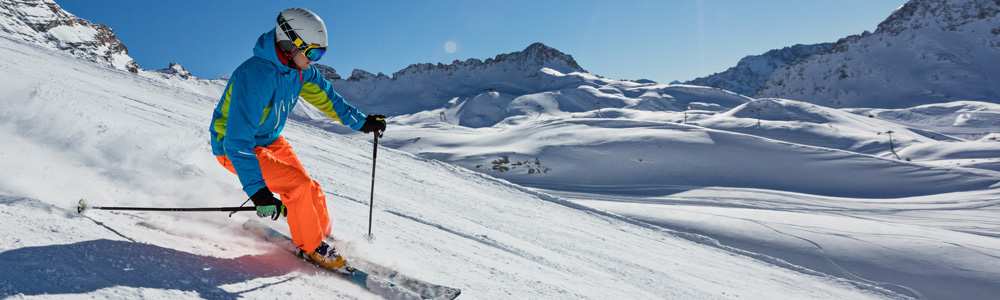
The first distinctive feature is Mediterranean snow. Snowfall often comes in episodes, with thaws between two weather systems. Freeze-thaw cycles harden the snowpack: you frequently find hard, refrozen snow in the morning, which transforms over the course of the day. Powder exists, but it doesn't last long. You therefore need to learn to read the ideal time for descending, often in late morning on sun-exposed slopes.
The second is the granite terrain of the major massifs: steep slopes, couloirs, rocky ridges and cliff bands that sometimes force you to take off your skis. The terrain is more alpine than it appears, and routes are rarely marked for winter. Summer trails, such as the GR20 that crosses the massifs, become unrecognizable under the snow.
The third, finally, is isolation. Outside the few developed sites, the valleys are sparsely inhabited in winter, high-altitude roads may be closed or tricky, and phone coverage is not guaranteed everywhere. Self-sufficiency and preparation are an integral part of the practice.
The four sectors of Haute-Corse for ski touring
Haute-Corse is divided into four major sectors, very unequal when it comes to snow. Terrain, altitude and aspect change everything:
- Central Corsica: the heart of the practice, with the Col de Vergio and the Niolu, the Restonica valley at the foot of Monte Rotondo (2622 m), the Asco valley at the foot of Monte Cinto and the Ghisoni area on Monte Renoso.
- Balagne: the western foothills of the Monte Cinto massif and the ridges of Monte Padro and Monte Grosso, skiable in well-snowed winters, with views over the Gulf of Calvi.
- Eastern Coast: the hinterland, with Monte San Petrone (1767 m), the roof of the Castagniccia, and the eastern slope of Monte Renoso accessible from the plain.
- Bastia / Cap Corse: terrain too modest for real ski touring, but a possible starting base for the neighboring massifs.
Each page details the terrain, conditions and the best combinations of activities specific to the sector.
Snow and season: when to go ski touring in Haute-Corse?
The season generally concentrates from January to March, with possible extensions in spring on the north slopes of the highest summits in good years. December can offer beautiful days if the first snowfalls are generous, but the snowpack often remains thin over the rocks.
Snow cover varies enormously from one winter to the next. Some seasons, the snow holds well from 1500 meters; others, it remains confined to the ridges. It is therefore essential to follow recent snowfall and mountain weather bulletins before booking a stay centered on ski touring, and to keep a plan B.
Spring remains the favorite period for many skiers: the days are long, the transformed snow is more predictable, and you enjoy the contrast between white summits and already green valleys. On the other hand, the risk of avalanches increases with the afternoon warming: start early and return before the heat.
Safety and equipment: the essentials
Ski touring is a mountain activity in its own right. In Corsica as elsewhere, some rules are non-negotiable:
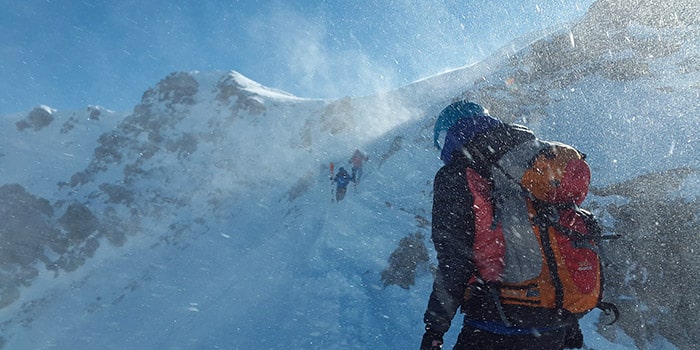
The trio transceiver – shovel – probe is mandatory for every participant, and you need to know how to use it. Before every outing, check the avalanche risk assessment bulletin published by Météo-France for the Corsican massifs, as well as the mountain weather forecast. The wind can be violent on the ridges, and fog sets in quickly on the slopes exposed to the sea.
On the equipment side, ski crampons are very useful on frozen morning snow, and crampons with an ice axe may be necessary on certain slopes. Bring what you need to navigate without visibility (map, compass, GPS track), a first-aid kit and warm layers: the temperature difference between climbing in the sun and a windy ridge is considerable.
Finally, for a first experience in Corsica, being accompanied by a certified high mountain guide is the best way to discover routes suited to the day's conditions.
Beginners and families: where to start?
Ski touring is not a family discovery activity in the usual sense: it requires a good level of off-piste skiing and solid physical fitness. For those who want to sample the Corsican mountains in winter without that commitment, snowshoeing is an excellent gateway, on gentle slopes in laricio pine forests or around the high-altitude plateaus.
To progress toward ski touring, the ideal is to have already practiced on the mainland, then to start in Corsica with short routes, on moderate slopes, ideally with a guide. The sites that once hosted small ski areas, such as Haut-Asco or Ghisoni-Capannelle, offer more accessible starting slopes than the major routes.
Which area to choose based on your profile?
Experienced skier looking for major routes: Central Corsica remains essential. Niolu, Restonica, Asco and Renoso concentrate the highest and longest slopes on the island.
Fan of skiing "with a sea view": Balagne and the hinterland of the Eastern Coast offer, in good winters, that rare sensation of skiing facing the Mediterranean, on lower but very scenic terrain.
Combined sea and mountain stay: stay on the coast and keep one or two days for the mountains when conditions come together. This is often the most flexible formula, since it lets you go skiing only on the good days.
Where to stay and what to combine with ski touring?
To explore the central massifs, Corte is the most logical base. Outside the summer season, remember to check the opening periods of accommodations, especially at altitude. The coast, from Calvi to the eastern plain, also allows you to drive up to the snow for the day.
When there's no snow, the Corsican mountains remain welcoming: hikes in Haute-Corse take over as soon as the snow melts, and the lakes of Haute-Corse, frozen in winter, become spectacular hiking destinations again in early summer. For those planning a broader stay, our guide to discovering Haute-Corse gives an overview of the island's regions, villages and activities.