Kayaking in Haute-Corse
Discover the best places to go kayaking in Haute-Corse!
Kayaking in Haute-Corse: from sea kayaking to inland rivers
Haute-Corse lends itself to kayaking in almost every form. In the north, the rocky coasts of Cap Corse and the Agriates Desert line up coves, Genoese towers and crystal-clear waters. To the west, the Balagne opens up large sheltered bays between Calvi and L’Île-Rousse. To the east, the East Coast stretches for dozens of kilometres of sand where the sea often stays flat in the morning. And in the heart of the island, rivers such as the Tavignano or the Golo offer, in the right season, a completely different side of kayaking: white water and mountain valleys.
Whether you’re looking for an hour’s family paddle from the beach, a half-day of sea kayaking to a cove inaccessible by road, or a guided river descent, this page helps you choose the right area, the right season and the right format.
Our selection of kayaking in Northern Corsica

Costa Verde Aventure
At the water sports base in Upper Corsica located at Mariani beach, come and discover…
Discover the activity
Sport and Wellness Corsica
Come and discover numerous activities such as canoe-kayak rental, pedal boats, paddleboarding, and even the…
Discover the activityKayaking in Corsica
Other activities
Kayaking professionals in Haute-Corse


The best nearby campsites


Sea kayaking, river kayaking: two different practices
Before choosing a spot, it is useful to distinguish the two main types of kayaking practised in Haute-Corse.
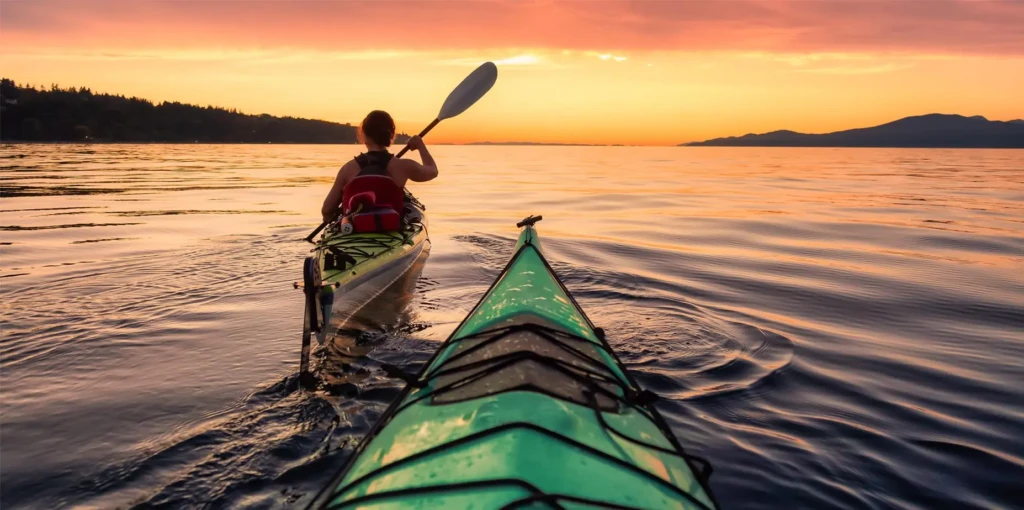
Sea kayaking is by far the most widespread. It is most often done with self-draining craft (known as sit-on-top), which are stable and easy to handle: you sit on top rather than inside, and any water that comes in drains away by itself. This is the ideal format for hugging the coastline, stopping in a cove and doing a bit of snorkelling. For longer outings, closed sea kayaks are used; they are faster and more directional, and require a minimum of technique.
River kayaking takes place on the rivers of the interior and the plain. It itself covers two realities: gentle-water paddling on the lower reaches, accessible to all, and white-water descents, reserved for periods of good flow (especially in spring) and requiring supervision or real experience.
Choosing your kayaking area in Haute-Corse
Each major area of the north of the island has its own personality. Here is, at a glance, what distinguishes them for kayaking:
- Kayak Bastia / Cap Corse: coves on the east coast of the Cap, Gulf of Saint-Florent, wild coastline of the Agriates and lower Golo river.
- Kayak Balagne: bays of Calvi, Algajola and L'Île-Rousse, granite coast to Galeria and the Fango delta.
- Kayak Centre Corse: river and white-water kayaking from Corte, on the Tavignano and in the mountain valleys.
- Kayak Côte Orientale: long sandy beaches, often calm sea, family outings and discovery of the Tavignano estuary at Aléria.
The north: cliffs, coves and marine park
The Cap Corse and the Agriates form the most "wild" terrain for sea kayaking in Haute-Corse. Their coastline is part of the Parc naturel marin du Cap Corse et de l'Agriate, created in 2016 and covering approximately 6,830 km² of sea: posidonia meadows, shallow rocky bottoms and exceptionally clear waters. This is the area to prioritize if you dream of paddling to beaches that can only be reached on foot or by boat.
The west: the large bays of Balagne
Balagne combines well-protected bays, ideal for beginners, with a more indented coastline towards the Revellata point and Galeria. However, it is exposed to the libecciu, the south-west wind, which can quickly stir up the sea. Several of its beaches are among the most beautiful beaches in Haute-Corse, making kayaking a great way to connect them.
Inland and the east: rivers and calm sea
Central Corsica is the domain of river kayaking, best reserved for spring when rivers are fed by snowmelt. The East Coast, on the other hand, is the easiest area for a first-time experience: gently sloping beaches, calm seas in good weather and tranquil rivers at their mouths.
Starting kayaking with family or friends
Kayaking is one of the most accessible water activities. For a first outing, here are a few simple guidelines:
- Know how to swim and always wear the provided buoyancy aid.
- Choose a tandem kayak if you're going with a child: the adult steers from the rear.
- Set off early in the morning, when the sea is calmest and the heat is bearable.
- Stay close to the shore: typical rental kayaks are generally beach craft, designed for navigating within the 300-metre band.
- Bring a hat, sunscreen, water and a waterproof bag for your phone.
For children, a one-hour paddle along a beach is often enough. Kayaking combines very well with other calm-water activities of the day, such as paddleboarding or pedal boating, to vary the fun without exhausting yourself.
When to go kayaking in Haute-Corse?
The best season depends on the type of kayaking you're planning.
For sea kayaking, the ideal period runs from May to early October. June and September are often the best months: the water is already (or still) pleasant, the light is beautiful and the beaches are less crowded than in high summer. In July and August, it's better to set off at opening time, before the thermal breeze picks up in the early afternoon.
For river kayaking, the calendar is reversed: the best water levels are generally found from March to June, when the snow melts on the peaks. In summer, most mountain rivers become too low for navigation and are better suited to swimming or canyoning.
Whatever the season, always check the marine weather or water levels before setting out, and don't hesitate to cancel if the wind picks up.
What can you combine with a kayaking trip?
Kayaking fits easily into a busy day. After a morning outing, an afternoon visiting the villages of Haute-Corse lets you cool off in the shade. Underwater enthusiasts can extend the experience with snorkelling or a scuba dive: our guide to the best diving spots in Corsica offers some good site ideas.
To go further without paddling, boat rental gives access to the most remote coves. And if you're travelling with your four-legged companion, our page on activities to do with your dog in Haute-Corse will help you plan your days. For an overview of everything the north of the island has to offer, browse our guide to activities in Haute-Corse.