Scuba diving on the Eastern Coast
Discover the diving spots on the Eastern Coast!
Diving on the Eastern Coast: shipwrecks and calm waters at the foot of Castagniccia
Facing the Tyrrhenian Sea, the Eastern Coast stretches out the longest coastal plain in Corsica, between fine sandy beaches and the Castagniccia hinterland. Less spectacular at first glance than the drop-offs of Cap Corse or Balagne, this maritime facade nevertheless hides surprising seabeds: World War II shipwrecks resting on the sand, a sea generally calmer than elsewhere on the island, and conditions that make it one of the best spots for learning scuba diving in Haute-Corse.
Our selection of diving activities for the Eastern Coast
At the Madreperla Diving Club
Nestled in the beautiful eastern plain region of Corsica, our club invites you to discover…
Discover the activity
Costa Verde Loisirs
Located in the port of Taverna, in Santa-Maria-Poggio, Costa Verde Loisirs is a key local…
Discover the activityDiving
Other activities
A gentler sea, between fine sand and gradually sloping seabeds
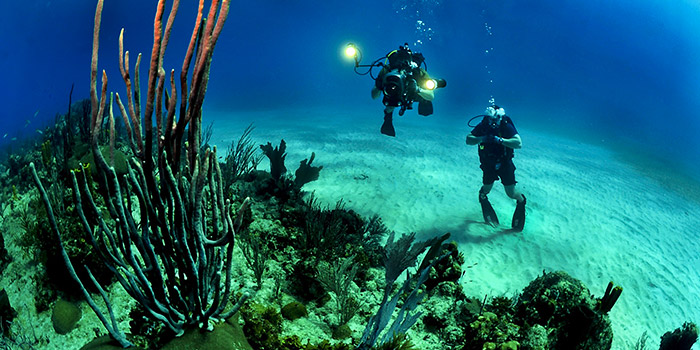
The configuration of the coastline, less rocky and less exposed than Cap Corse or the tip of Balagne, translates underwater into seabeds that slope down more gradually and a sea that is often calmer, sheltered from the prevailing winds that blow on the western side. This relative gentleness makes it a particularly popular area for beginners, without however lacking sites capable of satisfying more experienced divers, particularly on the wrecks lying offshore.
The Alcyone C and the wrecks of the Costa Verde
- A small 54-meter tanker, sunk off Moriani-Plage in 1943
- A depth of 24 to 35 metres, suitable for intermediate to advanced divers
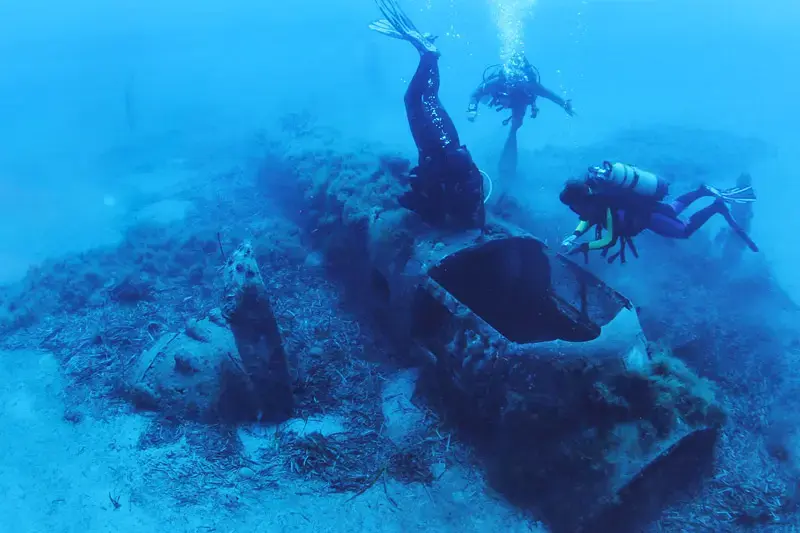
- An American fighter plane fuselage lying further north, towards Miomo
- Sandy seabeds dotted with rocky outcrops, refuges for local wildlife
- The long sandy facade of Moriani-Plage, departure point for many sea trips
Off Moriani-Plage lies one of the most renowned wrecks of the Costa Verde: a small tanker sunk during the Second World War, now colonised by groupers, brown meagres and moray eels, and sometimes visited by pelagic species passing offshore. Unlike the deeper wrecks of Cap Corse, this site remains accessible from an intermediate diving level, making it a popular destination for a first wreck dive.
A coastal plain shaped by rivers and lagoons
The Eastern Coast owes its distinctive geography to the many rivers that flow down from the Castagniccia and Casinca massifs to reach the sea, from the Golo to the Fium'Alto via the Tavignano. These river mouths shape an almost continuous fine-sand coastline, very different from the rocky coves of the rest of the island, and also explain the presence, further south, of vast coastal lagoons that shelter migratory birdlife. Underwater, this configuration translates into seabeds that remain sandy for a long time before encountering the first rocks, which explains why the wrecks lying offshore play such a central role here: they concentrate, on an otherwise fairly uniform carpet, the bulk of fixed life and refuges for fish.
A discreet but ever-present Mediterranean wildlife
Far from the spectacular drop-offs of Balagne, the seabeds of the Eastern Coast stand out for a mosaic of sand, posidonia and isolated rocks where combers, scorpionfish and schools of apogons take refuge. The rocky outcrops scattered across the seabed act as small oases of life, while the pure sand areas make it easier to observe more discreet species, such as rays or octopuses that partially bury themselves there during the day.
Getting started gently or diving with the family on the Eastern Coast
The general configuration of the coast, with seabeds that descend gradually and a relatively sheltered sea, is particularly well suited to a first dive experience or a return after several years without diving. Families also find what they are looking for: the shallow areas near the shore are ideal for an introduction to mask and snorkel before moving on, for older children, to a proper supervised dive. The deeper sites, such as the tanker wreck, remain reserved for already certified divers.
When to dive on the Eastern Coast
The season runs from May to October, with water that frequently exceeds 24 °C in July and August, sometimes more in late summer when the sea has stored the season's heat. The sea, generally more sheltered than on the western side of the island, remains workable even in a north-westerly wind, making it a good fallback option when conditions deteriorate elsewhere in Haute-Corse. Spring and early autumn offer cooler but often very clear water, with sites noticeably less frequented than in mid-summer, a definite advantage for approaching wildlife without being disturbed by other dive groups.
Outside the summer season, however, some days of easterly wind can make the sea rougher on this directly exposed side: local dive clubs then monitor the forecasts closely and do not hesitate to postpone a trip rather than dive in a choppy sea, particularly on the most offshore sites such as the tanker wreck.
Getting equipped and trained on site
As elsewhere in Haute-Corse, the East Coast has facilities capable of catering both to a first dive and to full training up to the most advanced levels. The generally gentle conditions also make it a popular setting for preparing certain training modules in complete peace of mind, before, for the most motivated, attempting more technical sites elsewhere on the island once the required level has been acquired.
Other activities to combine on the East Coast
Between two sea outings, the East Coast lends itself to many complementary activities. A boat trip lets you follow the coastline and spot new sites, while a paddleboarding session offers a calmer alternative for enjoying the coast. On land, nature lovers can head to the waterfalls of the hinterland, while the hilltop village of Cervione, the former Corsican capital, is worth a stop for its heritage. Several campsites in Moriani and Bravone offer direct access to the coast.
A coastline still preserved from mass diving tourism
Less publicised than the drop-offs of Balagne or the coves of Cap Corse, the East Coast retains a markedly more low-key level of diving activity, including at its best-known wreck. This relative discretion translates into sites where you rarely encounter other dive groups, even in high season, and into wildlife less accustomed to human presence, therefore sometimes more wary but also more authentic to observe. For divers seeking tranquillity as much as discovery, this coastline, long kept away from the island's major tourist circuits, offers an interesting alternative to the most popular spots in Haute-Corse.