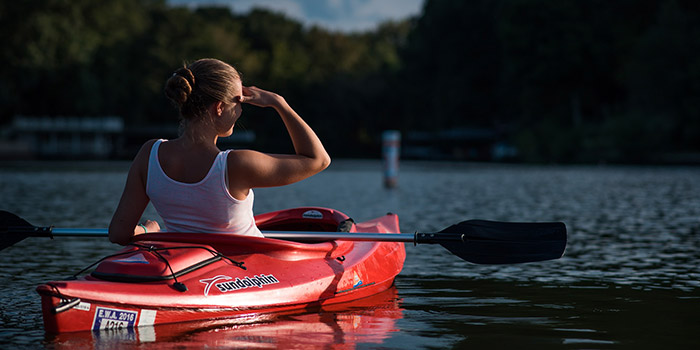
Kayaking in Balagne
Discover the kayaking activities to enjoy in the Balagne region!
Kayaking in Balagne: from the bays of Calvi and L’Île-Rousse to the Fango delta
Nicknamed the « garden of Corsica », the Balagne occupies the north-west of the island, between the Agriates desert to the east and the Gulf of Galeria to the south-west. Its hills covered with olive trees and perched villages descend towards a coast that alternates between large sandy bays and granite headlands. Two towns punctuate this coastline: Calvi, dominated by its citadel, and L’Île-Rousse, protected by its red rock islets.
For kayaking, the Balagne has a major advantage: within a few kilometres, you can go from a gentle family beach to a wild rocky coast. And further south, around Galeria, the Fango offers a rare river experience, in a UNESCO-recognised biosphere reserve.
Our selection of kayaking activities for the Balagne
Unfortunately no activities were found. Find more activities below!
Kayaking in Corsica
Other activities
Kayaking professionals in Haute-Corse
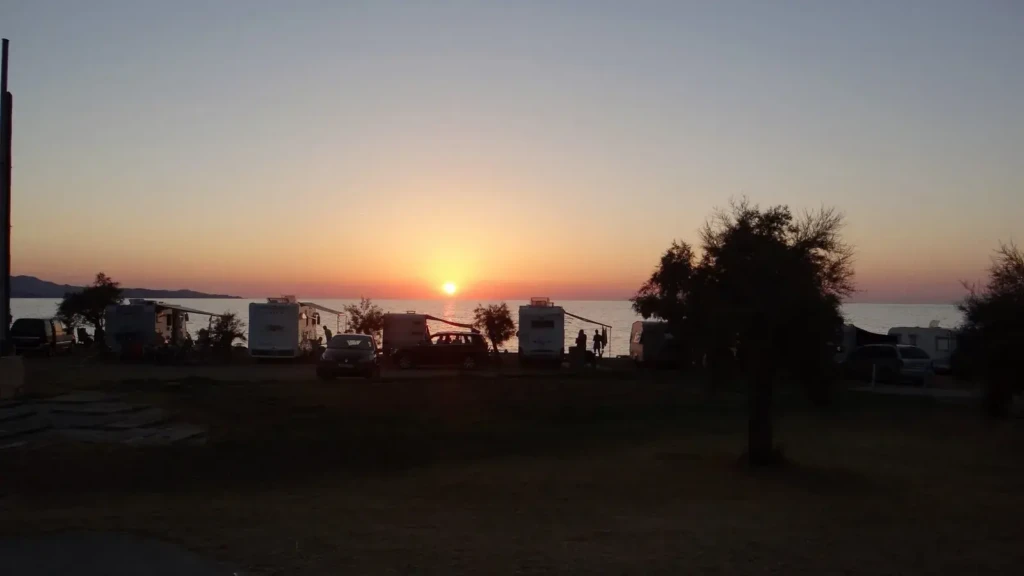
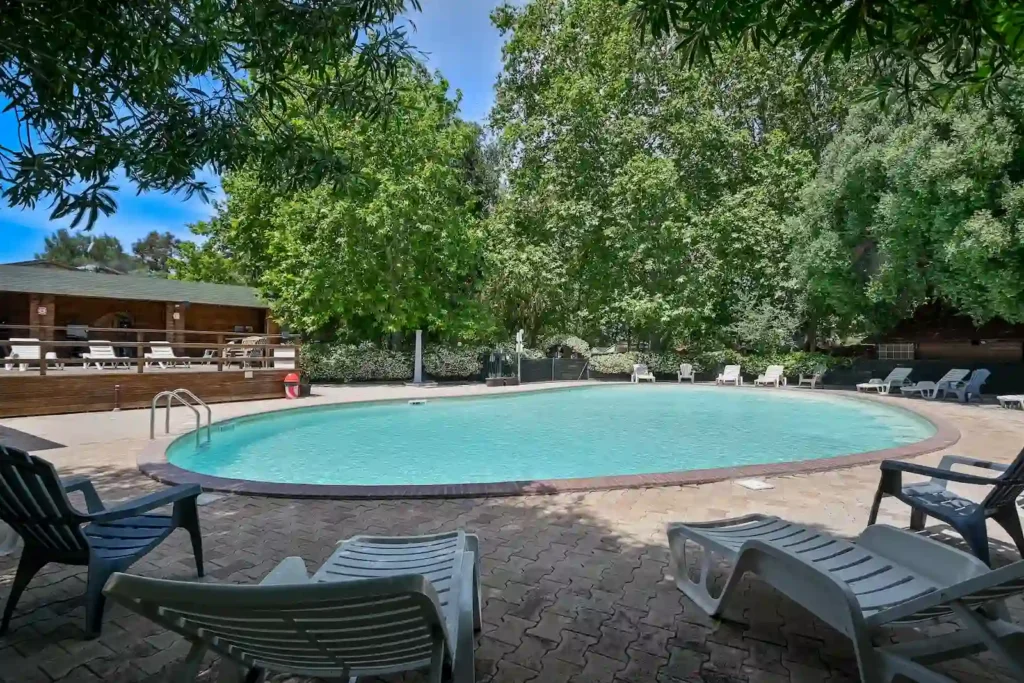
The best nearby campsites in Balagne

The bays of Balagne seen from a kayak
The Balagne coast is divided into a series of successive bays, each with its own character. The main bodies of water to explore by kayak:
- The bay of Calvi, wide and well sheltered, bordered by the citadel and the long pine forest beach.
- The coast between Lumio and Sant'Ambroggio, more indented, with small rocky coves.
- The beach of Algajola, about 2 km of fine sand, between a small port and rocks.
- The beaches of Corbara, such as Bodri beach, with very clear waters.
- The bay of L'Île-Rousse and its Pietra islets, topped by a lighthouse.
- The beach of Lozari, to the east, a long curve of sand at the outlet of Balagne.
From the water, Calvi reveals its most beautiful silhouette: the Genoese citadel perched on its promontory, facing mountains often snow-capped until spring. The pine forest beach, stretching about 5 km at the bottom of the bay, is an ideal launch point for a first outing. Further east, the Bodri beach, in Corbara, is one of the most photogenic in the area, with its light sand and turquoise water.
The Revellata point and the wild coast towards Galeria
West of Calvi, the Revellata point marks a change of scenery. The coast becomes rocky and indented, with coves accessible only by sea or by trails. The seabed is superb: posidonia meadows, rocks covered with algae and fish visible from the surface.
Beyond that, towards Galeria, the coastline becomes truly wild. This section is reserved for guided trips or experienced paddlers: few shelters, direct exposure to the west wind and long distances. Galeria is also at the gateway to the Scandola Nature Reserve, where navigation, anchoring and fishing are subject to strict and evolving regulations: always check before approaching.
Kayaking and snorkeling, the winning combination
The rocky coves in this area are particularly well suited to kayak-snorkeling: you paddle to a small inlet, stop on a pebble beach or in shallow water, and dive with mask and snorkel over the rocks. Bring a dry bag for your gear, a water bottle, and plan something to tie up the kayak or pull it well up onto the beach. Avoid stopping on Posidonia seagrass beds: they protect the seabed and feed much of the marine life you have come to see.
For a more relaxed discovery of Calvi and its surroundings on land, our guide to visiting Calvi is a useful complement to a morning on the water.
The Fango delta, kayaking in the heart of nature
At Galeria, the Fango flows into the sea at the end of a remarkably preserved valley. Its delta and valley are part of the UNESCO Biosphere Reserve, a unique designation in Corsica. Here there are no waves: you glide by canoe or kayak on slow-moving water, among reeds, alders and water lilies.
This is a different kind of outing, almost contemplative. The number of boats allowed at the same time is limited, and silence is essential so as not to disturb the wildlife. With a little patience, you can observe dragonflies, European pond turtles, mullet or eels. Then head up the Fango valley to enjoy its natural pools and rock slides.
When to go kayaking in Balagne?
The ideal season runs from May to early October. June and September are particularly pleasant: warm sea, golden light at the end of the day and less crowded beaches.
Balagne has one particularity, however: it is directly exposed to the libecciu, the south-west wind. When it blows, it can raise a significant swell in open bays within a few hours, to the point of making the sea impassable for kayaking. On libecciu days, the Fango delta outing, sheltered from the waves, is an excellent fallback. In stable fine weather, set off in the morning: the sea breeze generally strengthens in the afternoon.
Family and beginner kayaking in Balagne
Balagne has several bodies of water that are perfect for discovering kayaking with children. The head of Calvi bay, Algajola beach and Lozari beach, about 1.5 km long, offer gradual entries into the water and routes that stay within sight of the beach.
A few tips for a successful outing:
- choose a two-seater kayak to take a child on board;
- follow the beach rather than crossing the bay;
- do not approach marked swimming areas or port channels;
- bring water and protect yourself from the sun, which is very strong on the water.
To stay near the beaches, see our campsites around Calvi and our campsites around L'Île-Rousse.
Other activities to combine in Balagne
Balagne is enjoyed as much on the water as inland. After a morning of kayaking, head up to hilltop villages such as Lumio or Corbara, which offer beautiful views over the bays you have just explored.
On the nature side, the Bonifatu forest, at the foot of the mountains, hides cool pools ideal in summer, and the surrounding rivers can be descended by canyoning in Balagne. At sea, diving in Balagne reveals the drop-offs of the Revellata, while a boat trip gives access to the most remote sections of the coast.