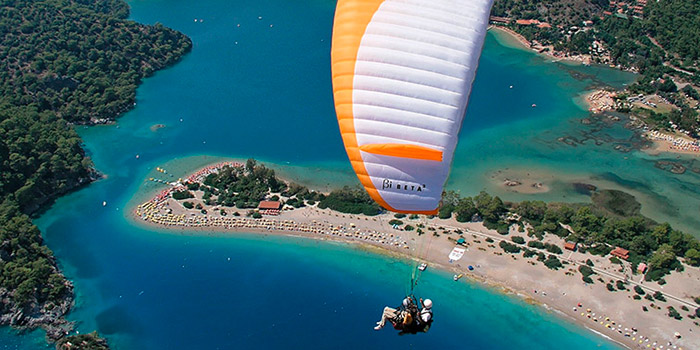
Paragliding in Haute-Corse
Discover paragliding activities in Haute-Corse!
Paragliding in Haute-Corse: guide to sites, season and tandem flights
Flying over Haute-Corse means embracing in just a few minutes what it takes days to cover on the ground: pale sandy beaches, deep blue gulfs, hilltop villages and, behind them, peaks rising to over 2,600 m. Paragliding is one of the gentlest ways to discover this landscape, accessible from childhood and with no prior experience, provided you choose the right area, season and time of day.
Our selection of paragliding activities for northern Corsica
Unfortunately no activities were found. Find more activities below!
Paragliding in Corsica
Other activities
Paragliding professionals in Haute-Corse
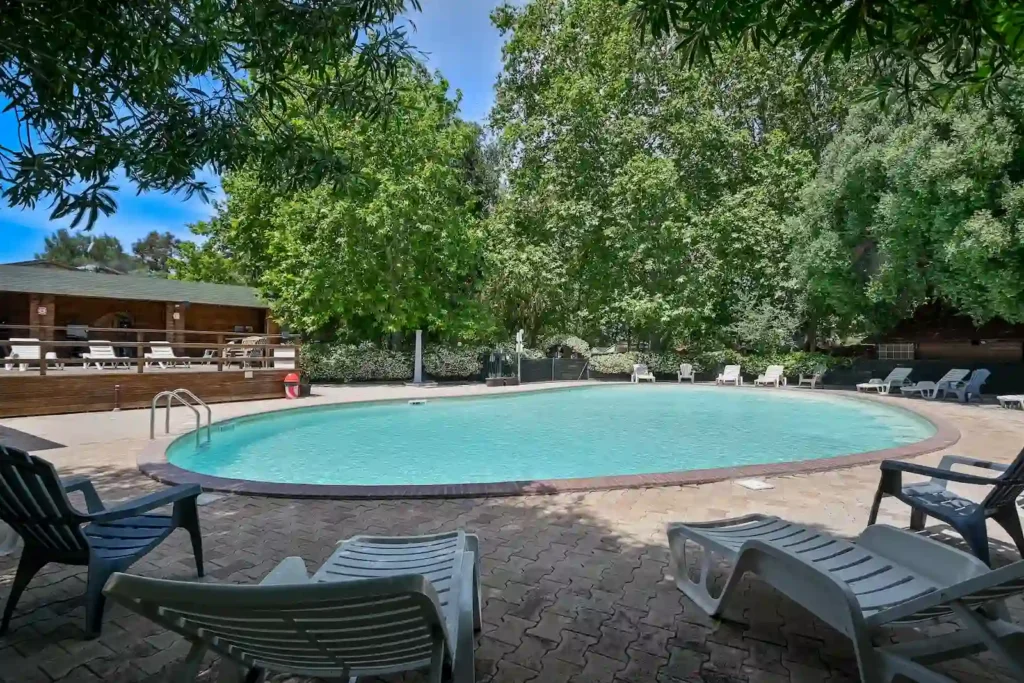
The best campsites nearby



Why Haute-Corse is an excellent flying terrain
Corsica is a mountain in the sea, and that is precisely what makes it exceptional for paragliding. The elevation difference between Monte Cinto and the shore reaches about 2,700 m over just a few dozen kilometres. The sun heats the slopes, sea breezes flow up the hillsides, and thermals are generous: experienced pilots achieve cross-country flights, while passengers mainly enjoy the light and the view.
This geography has a practical consequence: the prevailing winds, in particular the libecciu (south-west) and the north wind, close or open sites depending on their orientation. What is impossible on one side of the island is often practicable on the other. Knowing where to fly on a given day is part of the pilot's job, and that is why the choice of site is confirmed on the morning itself.
Haute-Corse is divided into four main flying sectors, each with its own atmosphere and terrain. Here is what distinguishes them:
- Bastia and Cap Corse: the Teghime pass, the Gulf of Saint-Florent and the schist ridges of the Cap, between two seas.
- La Balagne: seaside flights over Lozari, Calvi and L'Île-Rousse, with the possibility of landing on the beach.
- Central Corsica: high mountains around Corte, Monte Rotondo and Niolu, with its high-altitude lakes and summer storms.
- The East Coast: the thermals of Cervione, sheltered from the libecciu, above the Costa Verde plain.
Each of these pages details the sites, conditions, season and points of vigilance for the sector.
How to choose your sector according to your profile
The right sector depends less on your sporting level than on what you are looking for. A few guidelines help you decide.
For a first tandem flight with the family, La Balagne and the Bastia area are the most reassuring: flights are short, landings are clear and the evening light is particularly beautiful over the bay of Calvi and the Gulf of Saint-Florent. For lovers of sea views, La Balagne offers the most spectacular setting, between golden sand and mountains.
For those who love high mountains, Central Corsica is incomparable, but it requires more preparation: altitude, cold and storms make the weather more decisive than elsewhere. For experienced pilots looking for thermals, the East Coast and its slopes sheltered from the libecciu are a prime terrain, especially around Cervione.
Finally, for a stay of several days, the ideal is to keep flexibility: the wind decides, and being able to switch from one side of the island to the other makes all the difference. To understand the geography of the region before choosing, the page Northern Corsica gives an overview of its regions, beaches, villages and lakes.
The wind, master of the game
Paragliding is a weather-dependent activity. Across Haute-Corse, a few rules apply everywhere:
- The libecciu (south-westerly) is the main reason for postponements. It often closes several sites on one side of the island.
- A northerly wind makes several sites in the north of the island dangerous, particularly around the Col de Teghime and Cervione.
- Sea breezes often pick up in the early afternoon, and mornings (around 8 to 11 am) are generally calmer.
- Afternoon thermals, strong in summer, are more suited to experienced pilots than to first flights.
The pilot takes these parameters into account, along with weather reports, to decide on the site and time. A flight may therefore be brought forward, postponed or cancelled: this is a safety rule, never an unpredictable event that one simply endures.
A first tandem flight, step by step
A tandem flight is with a state-certified pilot who takes care of everything: equipment, inflating the wing, take-off and landing. The passenger only has to run a few steps, then enjoy. Allow 10 to 30 minutes of flight, and about 1 hr 30 in total including the welcome, briefing and transport to the take-off site.
As for equipment, closed shoes, long trousers, a windproof jacket and sunglasses are enough. Take-off and landing are smooth, without jolts. People with serious heart conditions or a fear of heights should talk to their doctor before booking.
When to go: paragliding season
The season runs from April to October. May-June and September-October are the most popular periods: moderate thermals, steady wind, less crowded sites and a sea that is still pleasant. July and August offer good conditions, but slots go quickly and afternoon thermals are powerful: flights are then in the morning or evening. From November to March, a few dynamic sites remain flyable with a favourable wind, but the weather is far more unpredictable.
To organise your stay, the simplest option is to choose central accommodation, starting from the campsites in Haute-Corse page, which groups establishments by area. The island's most beautiful beaches are a natural complement after a flight.
Paragliding and other activities: planning your day
Paragliding combines very well with other activities, including aerial ones. Skydiving offers another free-fall experience, and hiking in Haute-Corse gives the opposite viewpoint, on the ground. For a more challenging mountain experience, the via ferrata is worth the detour, and the lakes of Haute-Corse offer walking destinations above 1,700 m.