Paragliding in Bastia and Cap Corse
Discover paragliding activities in the Bastia / Cap Corse area!
Paragliding in Bastia and Cap Corse: soaring over the Gulf of Saint-Florent and the peninsula
Between Bastia and the northern tip of the island, Corsica narrows into a long spine of ridges that plunge on either side towards the sea. This narrow, north-south oriented relief is what makes paragliding in this area so special: within minutes of flight, your gaze shifts from the Tyrrhenian Sea to the Gulf of Saint-Florent, from the vineyards of Nebbio to the villages clinging to the slopes of the Cap. Whether for a first tandem flight or for a pilot already familiar with thermals, it is a flying area that is both easy to read and spectacular.
Our selection of paragliding activities for Bastia / Cap Corse
Unfortunately no activities were found. Find more activities below!
Paragliding in Corsica
Other activities
Paragliding professionals in Haute-Corse

The best campsites near Bastia and Cap Corse
An area with two faces: the east side sheltered, the west side more exposed
Cap Corse is a mountain of lustrous schist culminating at Monte Stello (1,307 m), and this backbone divides the peninsula into two atmospheres. On the east side, facing Italy, the slopes are sheltered from westerly winds and sea breezes set the pace of the day. On the west side, the slopes face the open sea and bear the full brunt of the south-westerly and westerly winds.
For paragliding, this duality is an advantage: when conditions are difficult on one side, there is often a flyable site on the other. The choice of take-off site is therefore made at the last moment, depending on wind direction and strength, and this is one of the reasons why flights are booked only a few days in advance rather than on a fixed slot ahead of time.
From the Teghime pass to the Gulf of Saint-Florent: the flying areas
The most popular area is around the Teghime pass, which links Bastia to the Nebbio and the Gulf of Saint-Florent in just 15 minutes by road from the city. Several slopes offer different orientations:
- A slope facing west and north-west, with a take-off at about 900 m altitude and nearly 850 m of vertical drop to the landing field in the large fields below. It is a site known to be easy in light winds, especially for evening flights when the daytime breeze drops.
- An east-facing slope, reachable in a few minutes' walk from the car park, suitable for first inflations and slope flights when the east wind sets in.
- The Gulf of Saint-Florent as a backdrop, with its clear waters, the vineyards of the Nebbio and, in the distance, the first foothills of the Agriates desert.
At the end of the day, the low sunlight across the gulf and along both sides of Cap Corse gives these flights a special quality. To continue exploring on the ground, the town of Saint-Florent, capital of the Nebbio and a major marina, lies a few kilometres from the pass, and the Agriates desert stretches out just behind it, covering around 15,000 hectares.
The west side of the Cap: a flight for experienced pilots
Further north, near Barrettali, a dynamic slope overlooks the western coast of the Cap, with a landing facing the sea. This type of site only works in breeze conditions, becomes turbulent in a north-west wind and is located near a high-voltage line: it is reserved for autonomous pilots who know it well. For visitors, the main interest is understanding why local pilots monitor the weather so closely.
This side of the Cap also offers the wildest landscapes. Back on the ground, a detour via the village and beach of Nonza, perched on its cliff above a black pebble beach, lets you see from the road what you flew over a few hours earlier. Further north still, the village of Centuri and its small fishing port complete the loop around the Cap.
Reading the wind: libecciu, tramontane and sea breezes
Paragliding is a weather-dependent activity before it is a thrill-seeking one, and the Bastia area is no exception. A few simple rules help you understand what is at play:
- The libecciu, a south-west wind, can close several sites at once. It is the main reason for postponing flights.
- A north wind makes most sites around the Teghime pass dangerous: take-offs are avoided at such times.
- Sea breezes often pick up in the early afternoon, while mornings (between around 8 am and 11 am) are generally calmer and more accessible for beginners.
- In summer, afternoon thermals can be powerful: late-day flights are often the most comfortable.
The airspace around Bastia-Poretta airport is also regulated, which means there are no-fly zones. This is something professional pilots handle for you, but it explains why not all sites are accessible at all altitudes.
First tandem flight: what to expect when departing from Bastia
A tandem flight is with a state-certified pilot: the passenger has nothing to control and takes off after a few running steps. Allow 10 to 30 minutes of flight and about 1.5 hours in total, including welcome, equipment and transport to the take-off. The minimum age is generally 5 years and the maximum weight is between 25 and 110 kg depending on the equipment.
The most useful things for comfort: closed shoes, long trousers, a windproof jacket and sunglasses. For a family with children, the morning is often the best slot, as the air is more stable. From Bastia, the climb to the Col de Teghime is short, making it easy to fit in a flight between a visit to the old town and a swim.
When to go flying over Bastia and Cap Corse
The paragliding season runs from April to October, with two particularly pleasant windows: May-June and September-October, when thermals are moderate and sites less crowded. In July and August, updrafts are stronger in the afternoon: it is then better to favour morning or evening. In winter, some dynamic sites remain flyable with a tailwind, but the weather uncertainty is much greater.
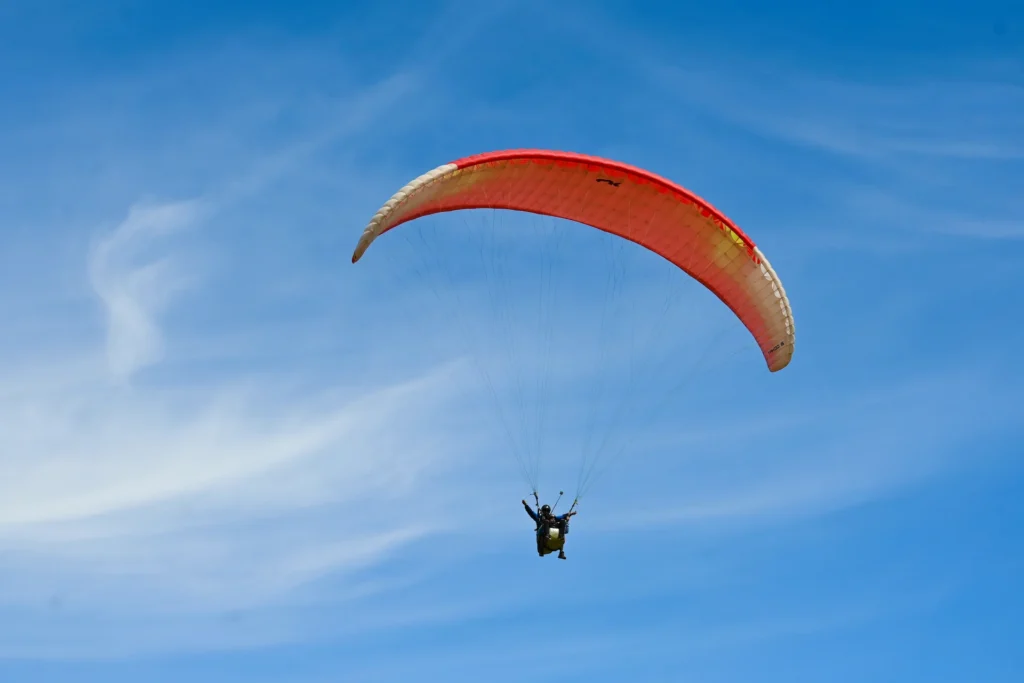
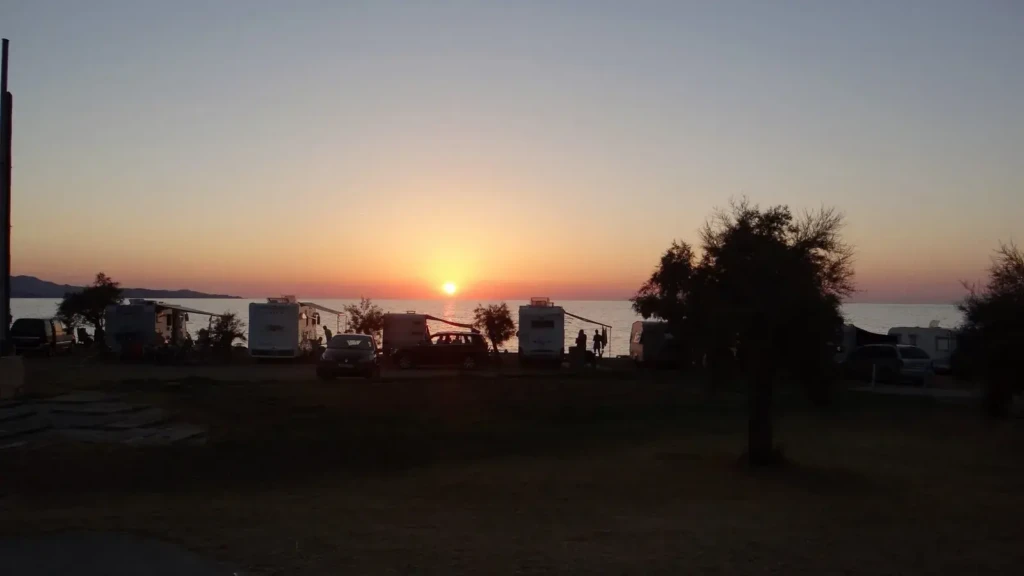
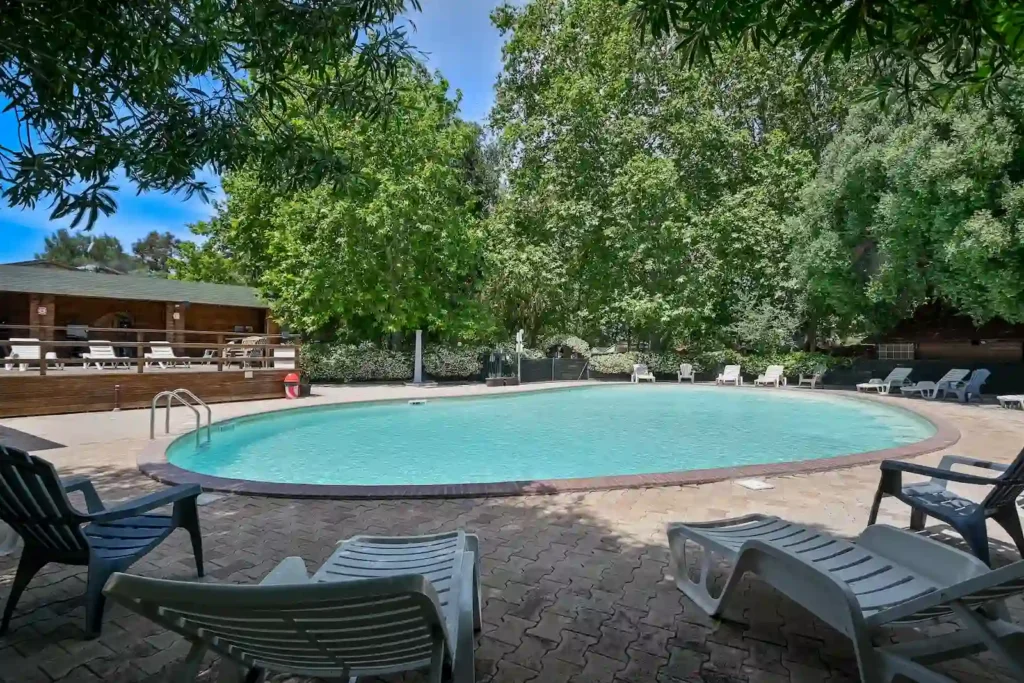
To organise your stay around this capricious weather, it is useful to sleep nearby: the campsites in Bastia allow you to reach the Col de Teghime in a quarter of an hour, while the campsites in Cap Corse are closer to the beaches and villages of the northern peninsula.
Other activities to combine with paragliding
A day in the air is best balanced with more grounded activities. The hikes in Bastia and Cap Corse offer the opposite viewpoint, from the ridge trails, and the most beautiful beaches in the region, from Barcaggio to Nonza, provide a swimming break after the flight. For a longer stay, you can visit the village of Erbalunga, with its harbour and Genoese tower, an easy stop north of Bastia.