Corsica offers exceptional aquatic treasures in the heart of its mountains, particularly in the Restonica and Asco valleys. These natural pools, sculpted over time in the granite, are cool havens prized by campers and hikers. Bear in mind that these natural swimming spots with crystal-clear water are an ideal alternative to the crowded beaches of the coast.
The proximity of specialised campsites makes it much easier to reach these natural wonders. In 2025, access and conservation rules for these sites have changed, so you’ll need to plan accordingly.
What’s more, water quality is subject to stricter checks by the Corsican health authorities. Here we guide you through discovering these havens of peace, where freshwater swimming means a complete change of scene and respect for the environment.
The Restonica valley: a water gem in the heart of Corsica
The Restonica valley stands out as one of Corsica’s most remarkable natural sites, awarded Grand Site de France status for its exceptional beauty and ecological fragility. The river rises at an altitude of 1,711 metres on Monte Rotondo and carves out a magnificent landscape over 16 kilometres, alternating steep gorges and natural pools of turquoise water.
The iconic natural pools of Grotelle
The Grotelle sheepfolds mark the end of the drivable road and are the main gateway to the most beautiful pools of the Restonica. These natural pools follow one another along the stream, forming a string of basins with strikingly blue-green water. Note that these geological formations are the result of thousands of years of granite erosion by meltwater.
The Grotelle pools vary in depth, so swimmers of all levels can enjoy them. Even in the height of summer, the water stays cool, ranging between 16 and 20 degrees, guaranteeing a refreshing dip. Some pools also feature natural rock slides carved into the stone, especially popular with the more adventurous.
The surrounding vegetation consists mainly of centuries-old Corsican pines and endemic plants, providing welcome shade during the summer heat. That said, please respect this fragile biodiversity, home to specific wildlife such as the macrostigma trout with its distinctive red spots.
Access and practical tips for the Restonica
Access to the valley is from Corte via a winding 20-kilometre road that climbs gradually towards the Grotelle sheepfolds. That said, a traffic management scheme limits car access in high season, with car parks of limited capacity. For this reason, it is strongly recommended to arrive early in the morning, ideally before 9am, to guarantee a parking space.
The access path to the pools from the Grotelle car park presents no technical difficulty, requiring only a few minutes’ walk on stable ground. As a result, it remains accessible to families with children, provided you stay vigilant near the water.
Bear in mind that summer crowds can seriously disturb the peace of the area, especially in July and August. That said, if you walk a little upstream or downstream, you’ll find more secluded pools for a calmer swim. On top of that, early risers and those who come in the late afternoon usually enjoy the best conditions.
The Asco gorges: a pristine haven with crystal-clear waters
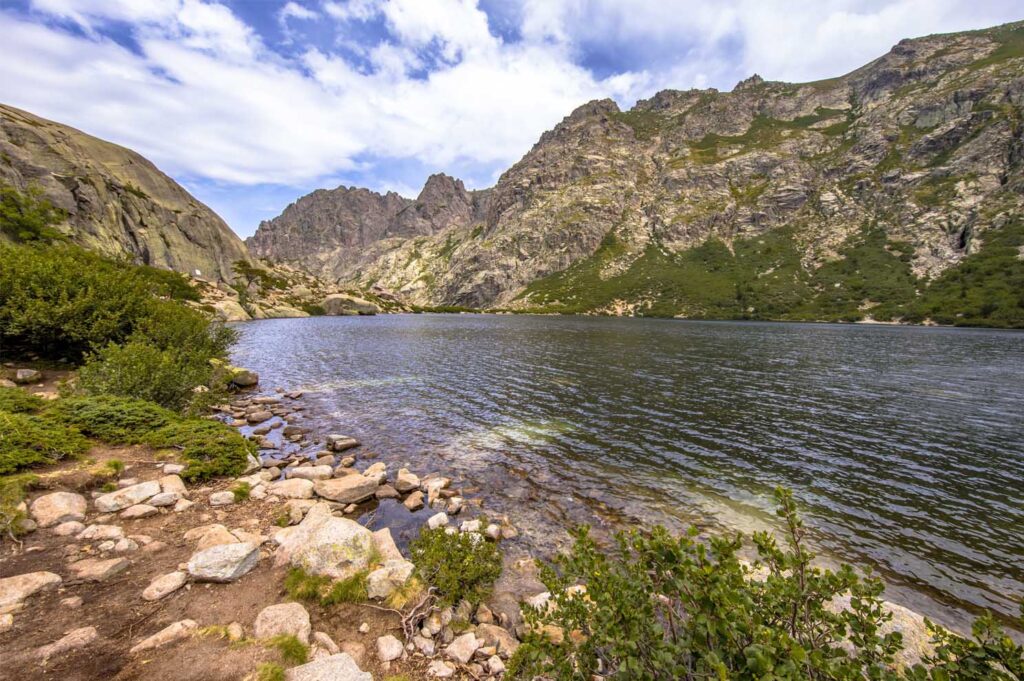
The Asco valley is wilder and less busy than the Restonica, offering swimming in unspoilt natural surroundings. This mountainous region in north-west Corsica reveals spectacular gorges where the water has carved perfectly shaped pools into the pink granite.
The most beautiful natural pools of the Asco
The Asco gorges are home to several remarkable swimming spots, particularly around the famous Genoese bridge that spans the river in a picturesque setting. These natural pools are known for their exceptionally clear water and generous size, making them perfect for a proper swim.
The Genoese bridge is the main landmark for finding the best swimming spots. The rocky surroundings also offer plenty of places to settle comfortably, with welcome natural shade during the hottest hours. Note that the depth of some pools makes them suitable for safe dives by experienced swimmers.
The water of the Asco stays cool even in summer, with temperatures slightly lower than those of the Restonica. That makes it perfect for cooling off on scorching days. What’s more, the crystal-clear water lets you spot local aquatic life and the underwater rock formations.
Routes and tips for exploring the Asco
Access to the gorges is from the village of Asco, along a 14-kilometre mountain road with some narrow sections. This winding road takes you through breathtaking scenery with unrivalled views of the surrounding massifs. You may also occasionally come across free-roaming cows, so drive carefully and respectfully.
Parking is in a small car park with recycling bins, about 3 kilometres past the village of Asco. From there, vehicles are not allowed to continue to the Genoese bridge, so you’ll need to walk for around 15 minutes along a tarmac road and then a natural path. These rules are designed to protect the site and ensure visitors’ safety.
It’s essential to bring suitable footwear for walking on the rocks and in the water, especially given the stony riverbed. Exploring the surrounding area also lets you discover more secluded corners away from the tourist crowds, for an authentic experience in tune with nature.
Accommodation and campsites near the swimming spots
Nearby specialist accommodation is a major advantage for making the most of the natural pools of the Restonica and the Asco. These establishments offer services tailored to river swimmers and wild-swimming hikers.
Campsites along the Restonica
Alivi Di A Restonica campsite enjoys an exceptional location right on the riverbank, just a 10-minute walk from the historic centre of Corte. This 82-pitch site offers direct access to the crystal-clear waters of the Restonica, in a setting shaded by centuries-old olive trees.
It’s worth knowing that this strategic location puts you just minutes from the natural pools. Restonica campsite is another excellent option, with its green grounds set right on the riverbank.
As a result, campers can fish and swim straight from the site, in a setting that’s all about peace and relaxation. What’s more, this 2-star campsite offers heavily shaded pitches with electric hook-ups.
These specialist sites focus on authenticity and respect for the natural environment. That said, they have all the essentials: a snack bar with terrace, free wifi, and local shops for everyday necessities. Bear in mind that their central location also makes it easy to explore the whole of Corsica, as they sit roughly equidistant from the island’s main attractions.
Where to stay near the Asco
The Asco area offers more scattered accommodation, reflecting the wilder character of this mountain valley. The village of Asco itself is home to a few family-run places that put authenticity and a close connection with local nature first.
The area’s campsites are mostly within a 25-kilometre radius of the gorges, striking a good balance between proximity to swimming spots and a range of services. Some sites offer shuttle services or personalised advice to help you make the most of the natural pools.
Note that accommodation capacity is limited in this area, so you’ll need to book ahead, especially in peak tourist season. That said, this scarcity helps preserve the wild, authentic character of the Asco gorges, guaranteeing a more intimate experience of Corsican nature.
Safety and protecting the natural environment
River swimming calls for specific precautions that differ from those taken in the sea. The rise in drownings in rivers and streams seen in 2025 highlights how important it is to be extra vigilant in these natural environments.
River swimming safety rules
National statistics reveal a worrying increase in drownings in rivers and streams, particularly among children and teenagers. Note that 43% of fatal drownings among children in 2025 occurred in this type of environment, compared with just 21% the previous year.
For this reason, constant supervision of young children is absolutely essential. The specific characteristics of Corsican rivers call for particular vigilance:
- unpredictable currents caused by changes in flow;
- particularly cold water that can cause cramps;
- slippery rocks and uneven riverbeds;
- no organised lifeguard cover, unlike on beaches;
- sudden changes in water level depending on the weather.
This list highlights the importance of proper preparation and of constantly assessing conditions before getting into the water.
It is essential to never swim alone and to always let others know what you plan to do. Beyond that, avoid drinking alcohol before swimming and respect your physical limits, especially in cold water, which can reduce your swimming ability.
Respecting the sites and eco-responsibility
Preserving the natural pools is a major challenge if we are to keep them beautiful and accessible for future generations. These fragile ecosystems are under growing pressure from increasing tourist numbers.
Eco-friendly practices include using only biodegradable sunscreens, fully respecting the surrounding vegetation and always collecting your rubbish. You should also avoid disturbing local wildlife, especially the endemic trout and nesting birds.
Keeping noise down and respecting the tranquillity of these places also helps preserve these natural environments. Good to know: some sites have specific regulations during the local wildlife breeding season. Ultimately, every visitor plays a part in conserving these natural gems through their own behaviour.
Other activities and visiting tips
Beyond simply swimming, the Restonica and Asco valleys offer plenty of activities to enrich your discovery of these exceptional areas. These extra activities turn a quick dip into a real outdoor adventure.
River hiking is an original way to discover the pools by heading upstream. Also known as gentle canyoning, it lets you reach quieter pools while enjoying a fun, refreshing experience. That said, this activity requires suitable equipment and ideally an experienced guide.
The hiking trails leading from the natural pools open up access to exceptional views over the Corsican mountains. For example, from the Grotelle sheepfolds, the trails to the Melo and Capitello lakes offer striking alpine scenery and are popular hiking destinations. Likewise, the Asco gorges are the gateway to the GR20 and its legendary stages.
River fishing is a popular complementary activity, especially for spotting the endemic macrostigma trout with its distinctive red spots. This activity requires compliance with local regulations and specific open seasons.
Nature photography finds exceptional subjects in these surroundings, from crystal-clear reflections to sculpted rock formations and endemic vegetation. Morning and evening light especially brings out the beauty of these natural settings.
The natural pools of the Restonica and Asco are favourite destinations for freshwater swimmers seeking the authenticity and wild beauty of inland Corsica. Note that these exceptional sites require a respectful, well-prepared approach to ensure both visitor safety and the preservation of the ecosystems.
On top of all this, the nearby specialist campsites make it easy to plan a stay devoted to discovering these wonderful swimming spots. Bear in mind that the changing rules and access conditions in 2025 reflect a desire to reconcile sustainable tourism with environmental protection. These oases of cool offer an appealing alternative to the coastal beaches, set in unspoilt mountain surroundings where natural beauty rivals the finest sites on the island.
All in all, careful planning of your stay, respect for safety guidelines and eco-friendly habits will ensure a memorable experience in these natural gems of Corsica, true havens of beauty and serenity in the heart of the Mediterranean mountains.