Via Ferrata on the Eastern Coast
Discover the Via Ferrata to enjoy on the Eastern Coast!
Via Ferrata Activities Eastern Coast: between coastal plain and hinterland gorges
The Eastern Coast unfolds the longest coastal plain in Corsica, lined with fine sandy beaches, but it also hides, a few kilometres inland, a much more rugged terrain. To the west, the hills of Castagniccia and the first foothills of the Fium’Orbo massif abruptly narrow the landscape into granite gorges. It is in this rapid transition between agricultural plain and steep terrain that the via ferrata finds its place, at the crossroads of a peaceful coastline and a much more vertical hinterland.
Our selection of Via Ferrata on the Eastern Coast
Unfortunately no activities were found. Find more activities below!
Via Ferrata
Other activities
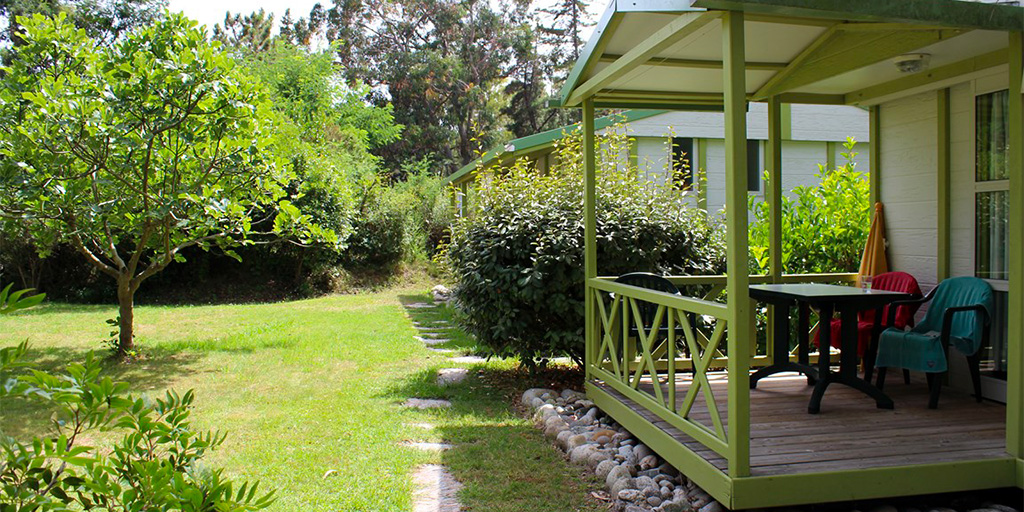
The best campsites near the East Coast


Two levels of landscape, one same region
The East Coast reads almost like a two-speed territory, between the coastal strip and the inland heights:
- The coastal plain, between Moriani and Ghisonaccia, with its long beaches and milder climate all year round
- The hills of Castagniccia, covered with centuries-old chestnut groves, west of Cervione
- The Fium'Orbo basin, further south, where the river has carved deep gorges between granite walls
- The first foothills of the Corsican central massif, which gradually close the horizon as you move away from the sea
This two-part relief, plain then tight mountains, explains why the East Coast is often perceived as a seaside destination when it offers, less than half an hour's drive from the coast, a mountain playground quite comparable to that of Central Corsica.
Granite gorges carved for verticality
The Fium'Orbo basin is particularly marked by this contrast: the river crosses a narrow passage between granite walls, so tight that it leaves only a narrow corridor between the road and the cliff. Further north, the Castagniccia valleys have a less steep relief but still rocky in places, with rock outcrops breaking through the chestnut forest cover. This type of narrow gorge, where the rock directly overlooks the riverbed, typically corresponds to the terrain sought for a via ferrata route, although its actual development always depends on the specific site. Vegetation also changes very quickly with altitude: the maquis and vineyards of the plain give way, from the first foothills, to chestnut trees and then pines that cover the inner slope, a plant gradient quite characteristic of this transitional sector between coast and mountain.
Via ferrata: between mountains and coastal hinterland
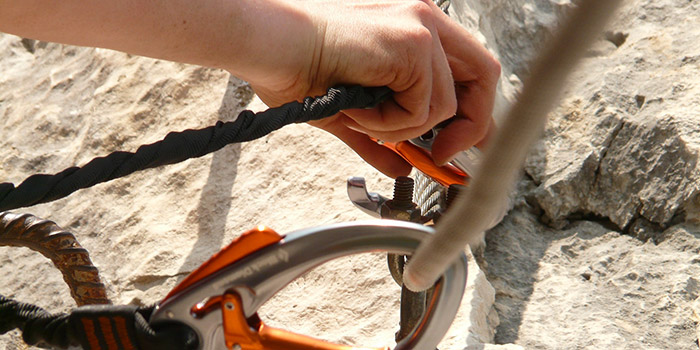
As elsewhere, progression is made by roping up at all times on a fixed cable, using a double-carabiner lanyard and a harness, with the support of rungs or bars on the steepest sections. The grading of a route, from F (easy) to ED (extremely difficult), gives a good indication of the level required before committing, particularly regarding the length of exposed sections and the possible presence of overhangs.
What distinguishes the Côte Orientale is the proximity between this mountainous terrain and the coastline: from certain high points in the hills of Castagniccia or Fium'Orbo, the view can stretch as far as the plain and, on clear days, to the Tyrrhenian Sea, offering a striking contrast between the dense green of the chestnut groves and the blue of the coast.
When to do via ferrata on the Côte Orientale
The proximity of the sea significantly softens the climate compared to central Corsica: the season generally runs from April to October, with particularly pleasant conditions in spring and late summer, when the heat of the plain remains bearable and the inland gorges retain some coolness. In the height of summer, it is better to schedule the most exposed outings in the early morning, as the heat can become intense in the narrow, poorly ventilated defiles of Fium'Orbo, which are exposed to the sun for much of the day.
Beginners and families: a rather accessible region
The less extreme terrain of the Côte Orientale, compared to the high peaks of central Corsica, makes it a sector generally accessible to beginners, provided a suitable route is chosen. Children can start from the age of 8-10 on short sections, under supervision and with equipment adjusted to their size. As elsewhere, a helmet, harness and energy-absorbing lanyard remain essential, along with shoes with good grip and sufficient water, as the heat can rise quickly in the narrow gorges by late morning.
Hiking, canyoning: other ways to explore the terrain
For those who prefer a less vertical approach, the hiking trails of the Côte Orientale allow you to discover the villages and chestnut groves of Castagniccia at a more leisurely pace, with access to several waterfalls in the region. Water sports enthusiasts will also find what they are looking for with canyoning activities on the Côte Orientale, which descend the same granite defiles of Fium'Orbo and the Castagniccia valleys, in a more discreet atmosphere than the great classics of central Corsica.
Extend your stay between beach and hinterland
The strength of the Côte Orientale lies in this dual identity: a morning in the heights of the Fium'Orbo gorges or the Castagniccia hills can easily be extended in the afternoon on one of the long beaches of the coastal plain. The campsites in the Ghisonaccia area and those in Moriani and Bravone offer practical bases for exploring both atmospheres. To discover other typical villages of the hinterland before choosing your route, the article discover the village of Campile in Castagniccia gives a good overview of Castagniccia and its heritage. For an overview of all the villages in the region, the page the most beautiful villages of Haute-Corse remains a good complementary resource, as does the page activities in Haute-Corse to compare offerings by sector before planning your itinerary.