Via Ferrata in Bastia and Cap Corse
Discover the Via Ferrata to practice in the Bastia / Cap Corse region!
Via ferrata in Bastia and Cap Corse: the peninsula seen vertically
Between Bastia and the tip of Cap Corse, the land ends in a long mineral ridge wedged between two seas. It is a territory of ridges, Genoese towers and villages clinging to the slopes, where the terrain often drops abruptly into the water. This permanent verticality, which is the charm of the region’s coastal paths, is also what attracts via ferrata enthusiasts: here, you don’t just look at the landscape, you literally climb into it, cable in hand and void beneath your feet.
Our selection of Via Ferrata for the Bastia / Cap Corse region
Unfortunately no activities were found. Find more activities below!
Via Ferrata
Other activities
The best campsites near Bastia and Cap Corse
A terrain shaped for exposure
Cap Corse forms a narrow peninsula about forty kilometres long, where the peaks flank the Mediterranean directly on one side and the Tyrrhenian Sea on the other. The bedrock alternates depending on the area between granite and schist, creating contrasting walls: some sheer and compact, others more layered, typical of the ridges overlooking the coastal villages. A few landmarks structure this terrain:
- Monte Stello, the highest point of Cap Corse, with its very open ridgelines
- Serra di Pigno, above Bastia, which dominates the entire eastern plain
- The Genoese towers perched on rocky promontories, often the only vertical landmark above the water
- Perched villages such as Erbalunga, built on the cliffside around a tiny harbour
It is this tight geography, where the mountains have only a few kilometres to reach the sea, that explains why the area lends itself so well to aerial routes: the gradients are steep, the viewpoints immediate, and the contrast between the rocky void and the blue of the sea below is ever-present.
The via ferrata, another way to cross the Cap
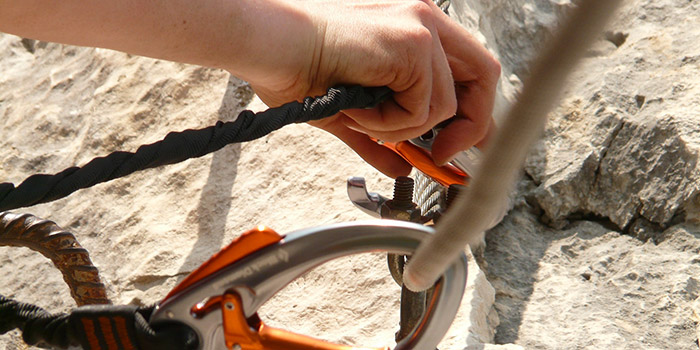
On a via ferrata route, you progress roped to a fixed cable, using a harness and a double-carabiner lanyard, assisted by steps, metal rungs or natural holds depending on the section. The activity does not require climbing experience: it is above all a matter of being comfortable with heights and having endurance in the arms and legs. In a setting like that of Cap Corse, the appeal lies as much in the technique as in the scenery: each rocky outcrop reveals a little more of the coastline, the coves and sometimes, on clear days, the silhouette of the Tuscan archipelago on the horizon.
The difficulty of a route is generally measured on a scale from F (easy) to ED (extremely difficult), depending on verticality, the presence of overhangs or the length of the aerial sections. The dense maquis covering much of the Cap's slopes also adds a sensory dimension to the ascent, with its scents of myrtle and cistus rising in the heat.
Hiking vertically: what the landscape reveals
What strikes most participants is how quickly the viewpoint changes. Within a few dozen metres of elevation gain, you go from a village with shaded alleys to a promontory overlooking the entire coast. The colours of the water, from turquoise near the shore to deep blue offshore, are particularly clear from these heights. It is no coincidence that the hiking trails of Cap Corse often follow the same ridge lines: the via ferrata simply offers a more direct and more committed version, reserved for sections where the slope becomes too steep for a classic path.
Thrill-seekers will also find a counterpart in canyoning in Bastia / Cap Corse, where the same ridges continue as deep gorges on the inland side. Two different activities, but the same reading of the terrain: here, the straight line between summit and sea is rarely measured on flat ground.
Beginners, families and technical levels
The via ferrata remains an accessible activity provided you follow a few common-sense rules. Children can generally start from the age of 8 to 10, supervised and equipped with gear suited to their size, on short and less exposed sections. For a first route, it is better to choose an outing supervised by a professional who can adjust the itinerary according to the group's comfort level, rather than setting off alone without experience of via ferrata equipment (which differs from that of classic climbing).
Vertigo is not necessarily a deal-breaker: some routes offer less exposed variants, with handrails rather than suspended passages. However, a good general level of fitness remains necessary, particularly for forearm endurance on the steepest sections.
When to go on the ridges of Cap Corse
The best period generally extends from April to October, with a peak in visitor numbers in July-August that is best avoided during the hottest hours: south-facing rock quickly stores heat, and shade is scarce on these open ridges. Spring and early autumn offer milder temperatures and a low-angled light that is particularly photogenic over the sea. In winter, wind remains the main limiting factor on this peninsula, which is highly exposed to both seas: it is better to check the day's conditions before setting out, as some ridge sections become uncomfortable or even dangerous in strong winds.
Extend your outing: other activities in the area
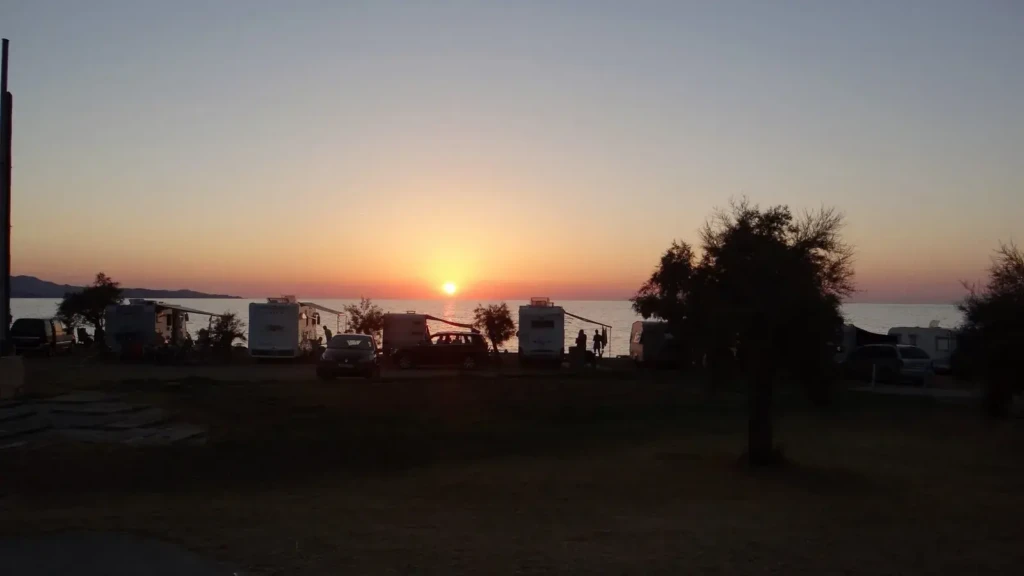
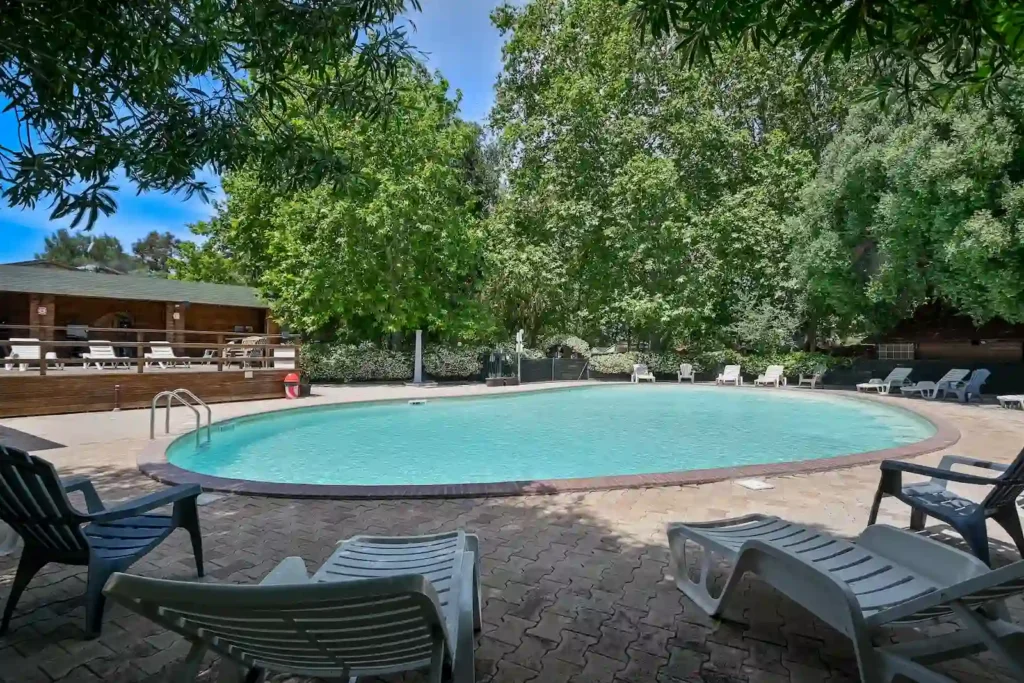
Once back down at sea level, Cap Corse and its Bastia area offer plenty of ways to continue the day differently. Head for scuba diving to explore the same granite formations from an underwater perspective with diving activities in Bastia and Cap Corse, or take a quieter break on the black sand of Nonza, a hilltop village known for its unusual beach and old Genoese tower. To extend your stay, the campsites in the Bastia area and the campsites in Cap Corse make it easy to travel between the various starting points, often only a few kilometres apart on this compact peninsula. To get a better sense of the area's geography before choosing your route, the article Cap Corse, the roof of the Isle of Beauty gives a good overview of the terrain and the villages that make it up. For accommodation outside campsites, the guide where to stay in Cap Corse details the options in the area for nights between outings.