The Pigna Village
The village of Pigna: A hymn to creation in the heart of Balagne
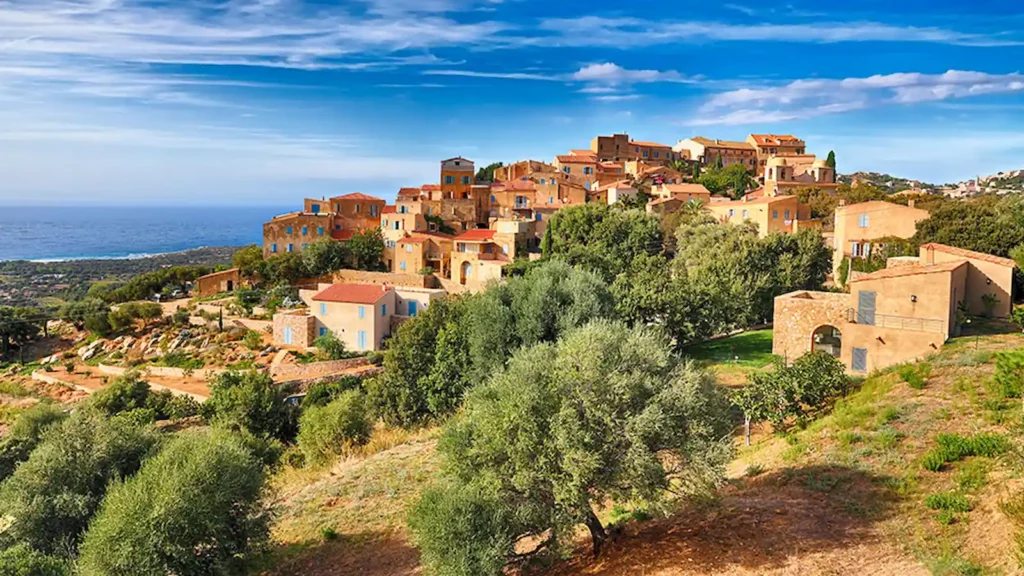
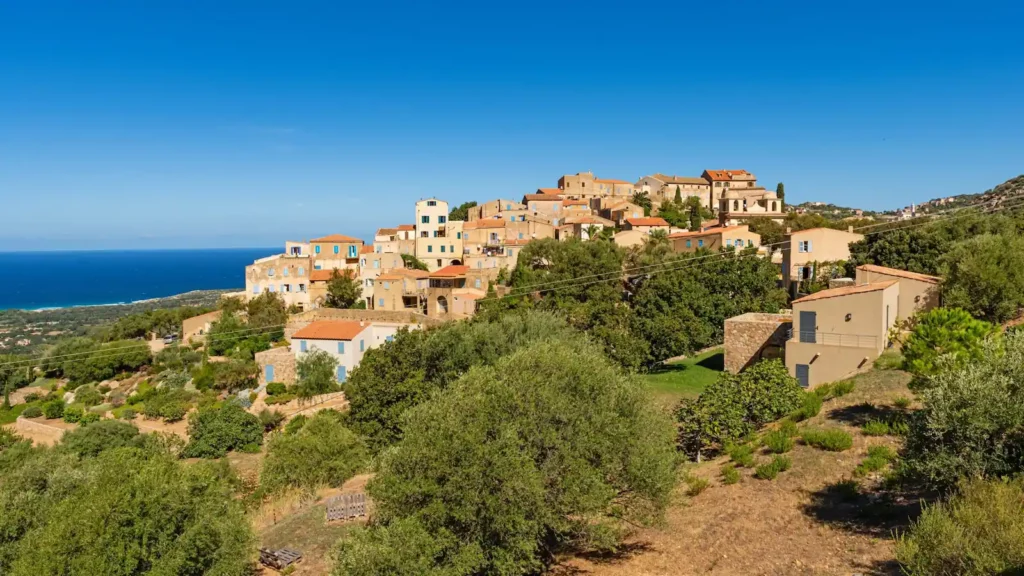
Overlooking the sea from the fertile hills of Balagne, Pigna stands out with its lavender blue shutters and light stone facades. This village, which has been reborn thanks to craftsmanship and music, offers an enchanted interlude away from the tumult of the coast. Through this guide, I will accompany you in exploring this territory where tradition and modernity engage in perfect harmony!
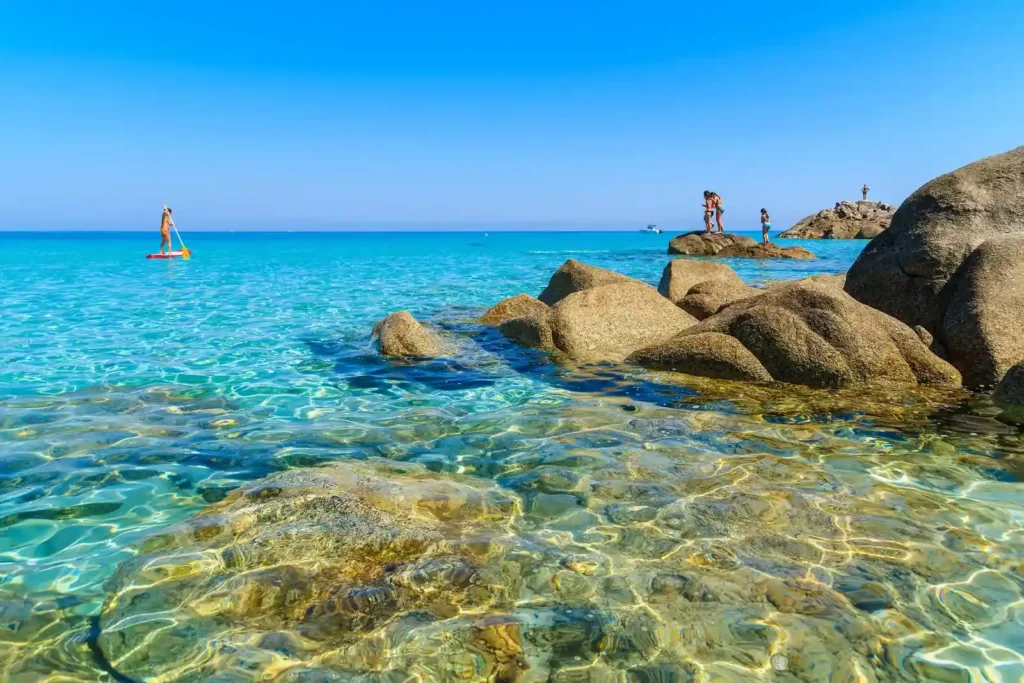
Pigna Village and Balagne
Pigna is a village in Balagne renowned worldwide for its cultural and artisanal dynamism. It is defined not only by its carefully restored medieval architecture but especially by its vocation as a ‘workshop village’. It is worth noting that the village houses the Centre for Musical Creation Voce and an auditorium built from raw earth, unique in its kind, making it a major hub for insular artistic expression!
Why is Pigna a model of ‘rural revitalization’?
The interest of Pigna lies in its ability to have transformed a demographic decline into a sustainable cultural and economic success. Its value is both heritage and symbolic: it proves that reasoned tourism, based on the art of living and the transmission of know-how, can preserve local identity Corsican. Furthermore, the village embodies an Island of Beauty that values its heritage while turning towards contemporary creation.
Where is the village located and how to reach it?
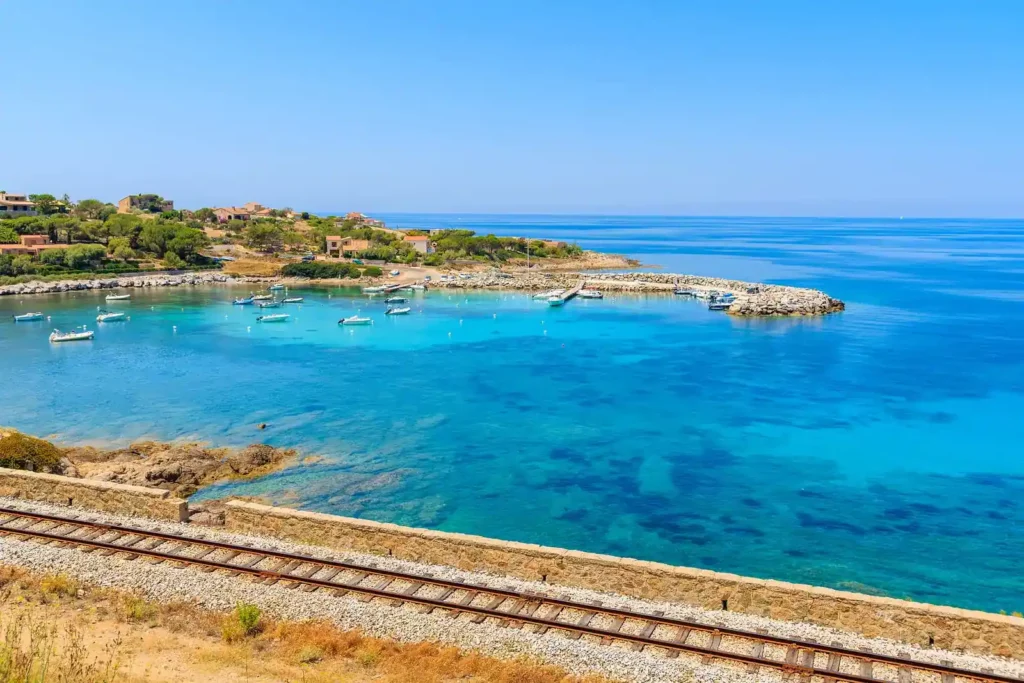
The village is located in ⟨0Upper Corsica, nestled between Algajola and Sant’Antonino. Imagine that Pigna is ideally situated on the famous ‘Route des Artisans’. To access it, you should follow the scenic routes of Balagne from Calvi or L’Île-Rousse. The village being entirely pedestrian, a mandatory parking area is located at the entrance to preserve the tranquility of the alleys, just like Sant’Antonino!
When to come to soak up the atmosphere of Pigna?
Know that Pigna is best discovered during the summer season, at the time of the Festivoce festival, where music resonates in every corner of the village. However, the months of May and September offer a softer light on the blue shutters and a tranquility conducive to discussions with artisans. At the end of the day, the village becomes a privileged observatory to contemplate the sunset over the bay.
How to discover its workshops and heritage?
The discovery of Pigna takes place through a slow stroll in its cobbled streets. It is essential to push open the doors of the workshops to discover the work of potters, luthiers, or engravers. A visit to the auditorium, which I mentioned earlier, is essential to understand the unique acoustics of this place. Moreover, numerous hiking trails connect Pigna to the neighboring villages, allowing for a comprehensive approach to the region’s landscape.
What should you pay attention to during your visit?
It is important to note that Pigna is an active place of life and creation. Respect for the artisans’ work is essential, as is preserving the calm that makes the site renowned. Also, note that the cobblestones can be slippery; good shoes are recommended for wandering safely. Finally, prioritize products marked by local authenticity to support the village’s economy, whether for yourself to make a small gift or to bring one back to the mainland, it is always appreciated, especially when it is handmade and local!
What to remember,
In the end, Pigna is much more than just a tourist stop: it is a deep sensory and cultural experience. By visiting this village, you participate in a responsible tourism approach that values excellence and authenticity. Corsicacamping.comencourages you to take the time to listen and observe the magic of Pigna to enrich your journey in Haute-Corse!
It’s time to discover Corsica!
To do this, nothing could be simpler, choose a Corsican campsite from the independent group Corsica Camping to enjoy an authentic, friendly, and deeply rooted accommodation, where every stay supports a vibrant and preserved Corsica.

FAQ about the Village of Pigna