Museums / Prehistoric Sites in Eastern Coast
Discover Museums / Prehistoric Sites on the Eastern Coast!
A long strip of flat land between mountain and Mediterranean, the Eastern Coast is unlike any other part of Upper Corsica. Here, there is no citadel overlooking a port or towers perched on cliffs: heritage is more evident in the landscape itself, shaped by successive occupations since antiquity, by coastal ponds exploited for centuries, and by a more recent agricultural history that transformed a long-marshy plain into one of the island’s main wine-growing and fruit-producing areas.
Our selection of Museums / Prehistoric Sites for the Eastern Coast
Unfortunately no activity was found. Find more activities below!
Museum
Other activities
A plain shaped by two thousand years of successive occupations
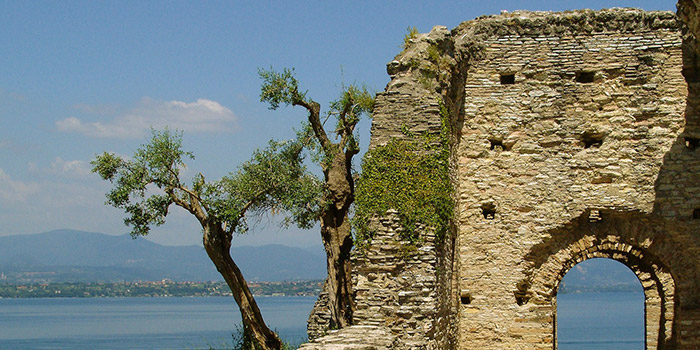
The eastern plain saw several civilizations succeed one another long before the arrival of the Genoese, who left their mark on the rest of Upper Corsica. Ancient trading posts, occupied in turn by populations from the Mediterranean and then integrated into the Roman Empire, have left traces in the soil of the plain, now studied by archaeologists around Aléria. This ancient layer is less visible at first glance than the Genoese towers of Cap Corse or the citadel of Calvi, but it partly explains why the region was long seen as a land of passage, rich but unstable, before the gradual draining of its marshes in the 20th century. Local populations actually long preferred to settle on higher ground, on the first foothills overlooking the plain, rather than on the coast itself: a caution that explains the inland position of most of the area's historic villages, quite different from the coastal settlement of the villages of Cap Corse.
Cervione and Penta di Casinca, memory of the Casinca hills
Set back from the plain, the hills of Casinca concentrate most of the built heritage visible from the Eastern Coast:
- Cervione, former Corsican capital during a fleeting reign, with its Baroque cathedral among the first on the island;
- Penta di Casinca, the only village in Haute-Corse classified as a "picturesque site" since 1973, known for its tall stone houses and carved porches;
- panoramic viewpoints over the plain, the sea and, on clear days, the Tuscan archipelago;
- a network of hamlets and rural chapels, inherited from a settlement historically withdrawn to the heights to escape the unhealthiness of the plain.
The village of Cervione preserves a singular episode of Corsican history: in the 18th century, Theodore de Neuhoff, a German adventurer who became for a few months the only King of Corsica, briefly established his capital there before his reign ended as quickly as it had begun. This royal interlude, as brief as it is astonishing, remains one of the most atypical episodes in the island's history. Further south, the village of Penta di Casinca also experienced a turbulent history, marked by one of Corsica's longest vendettas, between 1789 and 1821, before becoming today one of the best-preserved villages in the region.
The coastal ponds, an ancient oyster-farming tradition
The Eastern Coast also owes part of its identity to its ponds, coastal lagoons separated from the sea by long sandy strips. Lake Diana, the most famous, hosts a shellfish farming activity whose origins may date back to Antiquity: the brackish waters, rich in nutrients, offer particularly favorable conditions for the growth of oysters and mussels. This continuity between ancient practices and contemporary activity gives these ponds a special status in the regional heritage, at the crossroads of nature and humanity, quite different from the great urban monuments of other areas of Haute-Corse. These same lagoons also play an important ecological role, as stopover zones for many migratory birds, making them a heritage that is both historical and natural, to be observed as much as understood.
From the marshy plain to today's orchards
A large part of the Eastern Coast's recent history lies in a project less known than its monuments: the drainage of the plain in the 20th century. Long considered unsuitable for lasting settlement due to the malaria that prevailed there, the eastern plain underwent extensive drainage works from the 1950s onward, along with the use of DDT to eradicate the mosquitoes carrying the disease. This transformation enabled the rise of intensive agriculture, today focused on viticulture and citrus orchards, particularly the Corsican clementine, which has become one of the region's agricultural symbols. This transition from a feared plain to one of the island's main agricultural basins constitutes, in its own way, a fully-fledged part of the Eastern Coast's heritage—more industrial and more recent than that of the perched villages, but just as defining for understanding the region's current face. The large rectilinear plots visible today from the road, planted with vines or citrus trees, contrast sharply with the tight, irregular layout of the agricultural terraces in Balagne or Central Corsica, a direct legacy of this planned rather than gradual development.
A discovery suited to families
The Eastern Coast lends itself well to family discovery, notably thanks to its short distances and gentle relief compared to the other three areas of Haute-Corse. The villages of Casinca, led by Cervione, can be visited without great physical difficulty, with gently sloping streets rather than steep stairways. The ponds are easily walked or cycled along their edges, a peaceful activity well suited to children curious to observe herons and other water birds. Only the summer heat, more pronounced on the plain than at altitude, calls for planning outings early in the morning or late in the day.
When to go exploring the Eastern Coast?
Spring and autumn remain the best seasons to visit the villages of Casinca without suffering from the heat, with particularly pleasant light over the plain and ponds in the late afternoon. In summer, the heat on the plain can be more stifling than on the breezy coastline of Cap Corse or at altitude in Central Corsica: it is better to reserve village visits for the coolest hours and enjoy the coast in the middle of the day. In winter, mild on this eastern side, it allows a peaceful discovery of the villages, with very reduced tourist traffic.
Other activities to combine on site
The Eastern Coast offers good terrain for varied pleasures after heritage discovery. Hikes on the Eastern Coast allow you to reach the villages of Casinca via ridge paths offering wide views over the plain, while kayaking on the Eastern Coast can be practiced both at sea and on certain sheltered ponds. Underwater, diving on the Eastern Coast benefits from seabeds different from those of Cap Corse, with more gradual drop-offs typical of a sandy coast.
To deepen the discovery of the ancient heritage of the plain around Aléria, the guide activities to do in Aléria from Corsica Camping details the must-sees of the area.