Museums / Prehistoric Sites in Balagne
Discover Museums / Prehistoric Sites in the Balagne region!
Nestled between sea and mountains on the northwest coast of Corsica, Balagne stretches from Calvi to Île-Rousse and rises toward a hinterland of olive groves and villages clinging to the terrain. It is sometimes called the “garden of Corsica” for the gentleness of its land, but it also carries a dense history: a Genoese citadel that withstood sieges, fortified villages built to protect against Barbary raids, and craftsmanship that perpetuates centuries-old skills. This heritage is discovered as much in the stones as in the gestures passed down from generation to generation.
Our selection of Museums / Prehistoric Sites for Balagne
Unfortunately no activity was found. Find more activities below!
Museum
Other activities
Calvi, the citadel watching over the gulf
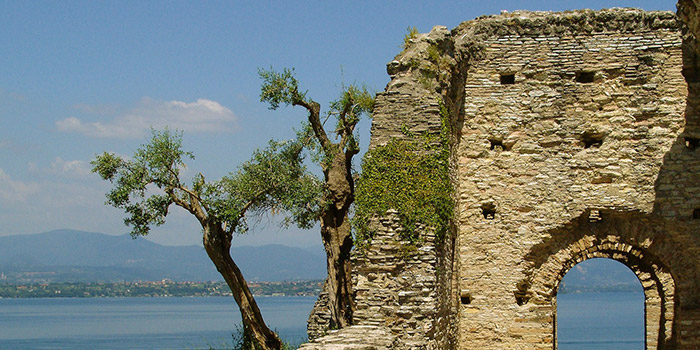
The town and citadel of Calvi occupy a rocky promontory overlooking the entire bay. Built from the 13th century by the Republic of Genoa, the citadel has preserved its fortified walls, narrow streets, and strategic position that enabled it to withstand several sieges over the centuries. It is also in Calvi that the legend anchors the town as the birthplace of Christopher Columbus, a story that remains vivid in local memory even though it has never been formally established by historians. Strolling through the alleys of the citadel, between ramparts and sea views, remains the best way to understand why Calvi long served as a maritime stronghold for the whole of Balagne. The heights of the citadel also offer one of the most beautiful panoramas of the northwest coast: on clear days, the view stretches across the entire Bay of Calvi, up to the mountain foothills closing the horizon inland. It is from here that the defensive logic of the whole Balagne becomes clearest, conceived as a system where the coastal citadel communicated with the perched villages of the hinterland to spot and signal any threat coming from the sea.
Perched villages of the hinterland: living memory of Balagne
A few kilometers are enough to leave the coast and reach the inland villages, often built high up to protect against raids from the sea. Among the must-sees in the region:
- Sant'Antonino, a circular village founded as early as the 9th century, considered one of the most beautiful villages in France and perched at nearly 500 meters above sea level;
- Pigna, a village-workshop where potters, luthiers, and engravers have revived a Corsican craftsmanship that remains very much alive;
- Corbara, former capital of Balagne with a rich religious heritage, featuring its convent and chapels;
- Montemaggiore, Lumio and Speloncato, other characterful villages clinging to the foothills, each with its own silhouette of bell tower and slate roofs.
In Sant'Antonino, the medieval defensive architecture remains visible in the circular layout of the granite houses, connected by vaulted alleyways: it is only accessible on foot from the entrance parking lot, wearing shoes suited to the sloping cobblestones. Pigna has taken the opposite approach: rather than freezing its heritage, the village has turned it into a living creative hub, with workshops open to visitors and a music creation center housed in a rammed-earth auditorium. In Corbara, it is the religious buildings that dominate: the Saint-Dominique convent, the Notre-Dame-des-Sept-Douleurs chapel, and the Church of the Nativity recall the role Balagne long played as a land of princely families and religious communities.
A land shaped by the olive tree and stone
The Balagne landscape owes much to the olive tree, cultivated here for centuries on terraces carved into the hillsides. This ancient agricultural economy has left clearly visible traces: oil mills, dry-stone grain granaries, and hamlets scattered among the olive groves, some still partly cultivated today. It is this alliance between rugged terrain, terroir, and clustered housing that gives the villages of Haute-Corse their very distinctive silhouette, quite different from the seaside resorts along the coast. The restanques, those dry-stone terraces built on slopes to retain cultivable soil, still structure a large part of the landscape between villages, even though many are no longer maintained due to a lack of agricultural labor. They are easily spotted while hiking, especially on the paths connecting the inland villages, where they trace long parallel lines across the slopes.
The coastline as a counterpoint to the inland villages
Balagne is not just its hinterland: the coastal strip between Calvi and Île-Rousse concentrates fine sandy beaches and small ports, in direct contrast with the perched villages just a few kilometers away. Setting up base at a campsite in the Calvi area or near the campsites of Île-Rousse makes it easy to explore both worlds without spending the whole day on the road. Île-Rousse itself has a particular history: founded in the 18th century by Pascal Paoli as a rival port to Genoese Calvi, it has retained a more open urban layout, organized around its central square and covered market, very different from the defensive spiral of the neighboring citadel.
A discovery accessible to families
The villages of Balagne generally lend themselves well to a family outing, provided you accept some climbs and sloping alleyways: Sant'Antonino and Corbara are best visited slowly, with no set itinerary, and children often enjoy the "fortified village" feel of their compact architecture. Pigna, with its open artisan workshops, works well as a playful stop between two more contemplative villages. For a first outing with young children, it is better to choose one village per half-day rather than stringing together several stops. Good closed-toe shoes remain useful almost everywhere: the cobbled alleyways, often sloping and sometimes slippery in wet weather, are hardly suited to sandals, even for a simple hour-long stroll.
When to go exploring Balagne's heritage?
The spring (April-June) remains the most pleasant time to visit the inland villages: the olive groves turn green, temperatures stay moderate for walking through the sloping alleyways, and tourist crowds are still reasonable. Autumn offers comparable light, with the added bonus of end-of-season colors. In the height of summer, the heat can make visiting the perched villages exhausting in the middle of the day: opt for early morning or late afternoon, and save the hottest hours for the coast.
Other activities to combine on site
Balagne lends itself to many activities in addition to heritage discovery. Hikes in Balagne connect some perched villages via historic mule paths, while kayaking in Balagne offers another perspective on the coast between Calvi and Île-Rousse. Underwater, diving in Balagne reveals rocky seabeds renowned for their visibility, and families seeking thrills can turn to tree-top adventure courses in Balagne, set in the heart of olive groves.
To extend your visit to the citadel of Calvi and its surroundings, the guide activities to do in Calvi from Corsica Camping details the city's must-sees.