Climbing in Central Corsica
Discover the climbing activities to enjoy in the Central Corsica region!
Climbing Activity in Central Corsica
Central Corsica is home to some of the island’s most beautiful granite terrain. Around Corte and Niolu, the gorges carved into the rock by mountain torrents, the hanging valleys and the ridges rising above 2,000 metres form a mineral landscape whose reputation extends far beyond the borders of Corsica. It is here, in the heart of the Regional Natural Park, that one of the most popular and most recognised climbing sectors of Haute-Corse is located.
Our selection of climbing activities for Central Corsica

AS Niolu
AS Niolu Mountain Activities in Corsica: Canyoning, Hiking, Skiing, Climbing and Mountaineering 📍 Albertacce, Central…
Discover the activityClimbing
Other activities
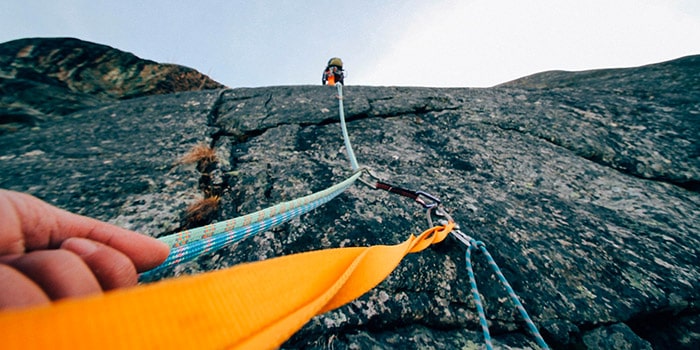
The Niolu and the Scala di Santa Regina
The Scala di Santa Regina is a spectacular gorge that links the Corte basin to the upper Niolu, carved into rock with reddish hues that contrast with the dark green of the surrounding pines. It is around this gorge and the village of Calacuccia, nestled in the heart of the Niolu on the edge of its reservoir lake, that most of the climbing sites of Central Corsica are concentrated. The area benefits from direct road access from Corte, making it an easy destination to include in a stay at a more coastal base camp.
A few landmarks to help you locate this exceptional area:
- The Scala di Santa Regina, a deep gorge that concentrates several climbing areas, between Corte and the Niolu.
- The village of Calacuccia, gateway to the Niolu, with its dam lake nestled at the foot of the peaks.
- The Restonica valley, famous for its granite gorges and its rock pools where you can swim after the effort.
- The Asco valley, another great granite gorge 9 kilometres long, at the foot of Monte Cinto.
- Lake Nino, at an altitude of 1,743 metres in the Niolu, accessible by a hike from the Col de Vergio on the GR20.
Granite rock, between lakes and gorges
The granite of Central Corsica is renowned for its quality: a compact, highly adherent rock that allows for varied routes, from technical slabs to straightforward cracks, sometimes over several pitches. This reputation extends well beyond the regional sphere, with Central Corsica ranking among the most frequently mentioned climbing destinations on the island alongside the massifs further south. The highly indented terrain multiplies the available orientations, which in theory makes it possible to find a face in the shade or in the sun depending on the time of day.
The relatively high altitude of many sites (often between 800 and 1,500 metres) has a twofold consequence: cooler conditions than elsewhere in Haute-Corse in the height of summer, but also possible snow cover in winter and early spring on the highest sectors, which can delay the start of the season by a few weeks compared with the coast.
Mountain wildlife is also part of the experience: it is not uncommon to spot mouflons on the surrounding rocky slopes or a golden eagle soaring above the ridges, a raptor emblematic of the Corsican peaks. The relative silence of these deep valleys, far from the bustle of the coast in summer, adds further to the singular character of climbing in this area.
Equipment and safety in the gorge
The Scala di Santa Regina and the neighbouring valleys call for a few precautions related to altitude and the enclosed nature of the terrain. Mornings there are often cool, even in summer, which justifies bringing an extra layer in addition to the usual technical equipment (harness, helmet, sticky shoes). On multi-pitch routes, a sufficiently long rope and a full set of quickdraws are necessary: this type of terrain is better suited to supervised practice or to climbers already experienced in self-sufficient climbing than to a first outing.
The relative remoteness of certain sectors from the villages of the Niolu also means you should plan your water and food supplies before setting off, as shops are scarcer than on the coast. Mobile phone coverage also remains patchy at the bottom of some deep valleys, something to take into account for safety, particularly when climbing self-sufficiently far from the main roads.
When to go to Central Corsica
The high climbing season runs from May to October, with an optimum in June and September when the days are long and temperatures are still moderate at altitude. July and August remain workable thanks to the relative coolness of the mountains, provided you avoid the hottest hours of the middle of the day. Outside this period, snowmelt in spring or early snowfall at the end of the year can make certain approaches more tricky: checking locally on the state of the mountain roads before setting off is always worthwhile, particularly for reaching the most remote sectors of the Niolu.
A practice for all levels
Central Corsica offers a wide enough range to accommodate both a family looking for a first introduction and an experienced climber coming to link several pitches. Supervised outings, with a qualified instructor and equipment provided, allow for a safe introduction on routes chosen according to the group's level. For the more independent, the density of sites around the Scala di Santa Regina makes it possible to vary the pleasures over several days without changing base camp.
After a session on the rocks of the Niolu, the proximity of the natural pools of the Restonica and the Asco allows you to extend the day with a refreshing swim, a combination particularly appreciated in the height of summer heat.
Other activities to combine
Central Corsica is undoubtedly the region of Haute-Corse richest in mountain activities. Local canyoning allows you to descend the same torrents that carved the granite gorges of the area, while the via ferrata of Central Corsica offers another way to approach verticality, with fixed equipment that secures your progress. The hikes in the region allow you to reach on foot sites such as Lake Nino or the lakes of Melo and Capitello, two high-altitude lakes accessible from the Restonica valley. For families with young children, the treetop adventure courses of Central Corsica are a gentler alternative to climbing.
For swimming, the natural pools of the Restonica and the Asco are a must for cooling off after a day of climbing. A stop in Corte also lets you discover the Museum of Corsica, housed in the citadel, to extend the day with something more cultural. Finally, a night in one of the campsites of Corte makes it easy to explore the whole of Central Corsica, between Niolu, Restonica and Asco.