Scuba diving in Balagne
Discover diving spots in the Balagne region!
Diving in Balagne: Revellata, Calvi and L’Île-Rousse
From the bay of Calvi to the outskirts of L’Île-Rousse, Balagne combines crystal-clear sea and mountain foothills that plunge almost directly into the water. This configuration, rare in the Mediterranean, creates remarkably diverse seabeds within a compact area: rocky canyons, vertiginous drop-offs, Second World War wrecks and posidonia meadows follow one another just a short distance apart, making this sector one of the most renowned in Corsica for scuba diving.
Our selection of diving activities for Balagne
Unfortunately no activity was found. Find more activities below!
Diving
Other activities
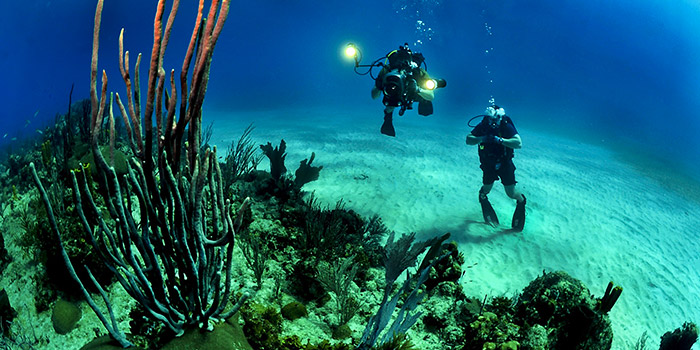
The Revellata peninsula, the beating heart of diving in the Balagne region
At the mouth of the Calvi bay, the Revellata point encloses a small underwater world considered by many divers to be one of the most beautiful on the island. An underwater and oceanographic research station has been studying the richness of these seabeds for decades, a further sign of their scientific as well as touristic interest.
- Rocky canyons and corridors between 15 and 35 metres deep
- Abrupt drop-offs colonised by gorgonians and encrusting anemones
- A wreck of an American bomber from the Second World War resting at a depth of 25 to 27 metres
- The Grand Tombant off Île-Rousse, between 25 and 40 metres
- Shallow coves along the most beautiful beaches of Balagne, ideal for beginners
The Revellata site owes its reputation to a spectacular underwater architecture of faults and corridors that open onto drop-offs where groupers, dentex, amberjacks and sometimes schools of barracuda roam. Lobsters hide in the crevices, while purple gorgonians and sponges colour the rock from about fifteen metres deep. A little further offshore lies the wreck of an American four-engine aircraft shot down during the Second World War: resting on a sandy bottom at around 25 metres, it now shelters scorpionfish, moray eels and schools of apogon, and remains accessible to intermediate-level divers.
From the Grand Tombant of Île-Rousse to the coves of Corbara
Further north, off Île-Rousse, a vast rocky drop-off descends to 40 metres and concentrates a particularly dense fauna: moray eels, groupers and purple gorgonians share the wall, covered in places with brightly coloured sponges. Conversely, the coves bordering Corbara and its long sandy beach offer much gentler seabeds, perfect for observing wrasse and octopus near the surface before descending deeper.
Between sea and mountain, the hilltop village of Pigna and the hamlet of Montemaggiore, like Corbara a little further down, remind us that Balagne is not limited to its coastline: a few minutes' drive is enough to go from the seabed to the granite alleys of a typical village.
A bay protected by posidonia meadows
At the bottom of the bay of Calvi as in the more discreet coves that extend it northwards, vast posidonia meadows carpet the sandy seabeds between a few metres and about twenty metres deep. This marine flowering plant, endemic to the Mediterranean, plays an essential role in the balance of the coastline: it shelters juvenile fish, sea urchins and small crustaceans, while stabilising the sand and producing part of the oxygen dissolved in the water. Swimming above these underwater prairies, between two visits to more spectacular drop-offs, allows you to appreciate just how much the good health of the Balagne seabeds depends on this discreet but fundamental ecosystem.
Getting started or diving as a family in Balagne
The diversity of depths around Calvi and Île-Rousse makes it possible to put together a tailor-made diving holiday. The sheltered coves close to the shore, at shallow depth and generally little exposed to current, are perfectly suited to a first dive or a gentle return to the water, including for young teenagers. The most spectacular sites, such as the canyons of the Revellata or the Grand Tombant, on the other hand require certification and good self-sufficiency, as the depth and sometimes the current are more pronounced there.
For the youngest or non-divers, surface exploration remains an excellent introduction: mask and snorkel are enough to observe fish and posidonia along the sheltered beaches of the region before attempting, a few years later, a first scuba dive. Several local operators also offer combined outings, pairing a first supervised dip in the water with equipment suited to younger participants and a more advanced exploration for the adults in the group, a formula appreciated by families who do not all share the same level of experience.
A practice that respects a heavily frequented coastline
The fame of the Revellata and the bay of Calvi attracts many divers and boaters every summer, which requires particular vigilance to preserve the quality of the seabed. Wild anchoring on posidonia meadows is to be avoided, as is the removal of shells or any element of the underwater scenery, including the smallest fragments of coral or sponge. Local clubs, often heavily involved in environmental awareness, readily remind people of these good practices before each outing, a reflex that benefits all users of the bay in the long term.
When to enjoy the waters of Balagne
The most favourable season runs from May to October, with a peak of thermal comfort in July and August when the water exceeds 24 °C. Spring often offers exceptional visibility, before the summer crowds arrive, while September and early October still allow you to enjoy warm water with less frequented sites. The north-west wind can occasionally stir up the bay of Calvi; local clubs then adjust the day's site towards more sheltered areas, around Île-Rousse for example. Conversely, windless days, frequent in late spring and early autumn, allow easy access to the most exposed sites, such as the Grand Tombant, in flat sea conditions that greatly facilitate the observation of passing pelagic fauna.
Extending your stay: other activities in Balagne
Between two sea outings, Balagne lends itself to many complementary activities. Thrill-seekers can try sea kayaking to follow the coast at their own pace, or attempt the via ferrata in the foothills of Monte Grosso for a change of scenery. Those who prefer to stay on the water can opt for a paddleboarding session in the bay of Calvi. Several campsites around Calvi make it easy to explore between the coast and the hinterland.