Scenic Flights / Microlights in Bastia and Cap Corse
Discover Scenic Flights / Microlights in the Bastia / Cap Corse area!
Microlighting over Cap Corse and the Bastia area: the peninsula from above
Cap Corse is best told from above. This long peninsula, some forty kilometres of it, thrust out like a finger pointing towards Liguria, unfolds landscapes on both its slopes that the coastal road only reveals in fragments. From a microlight, you take them in all at once: villages clinging to the hillsides, Genoese towers standing sentinel, tiny coves, and everywhere that sharp boundary between the deep blue of the sea and the grey-green of the maquis. Between Bastia and Saint-Florent, flying over this area offers one of the finest grammars of the Corsican landscape.
Our selection of Scenic Flights / Microlights for Bastia / Cap Corse
Unfortunately no activities were found. Find more activities further down!
Scenic flights and microlights in Corsica
Other activities
Scenic flight and microlight operators in Haute-Corse

The best campsites near Bastia and Cap Corse


A peninsula best read from above
What strikes you first is the geometry of the Cap. A mountain ridge, the Serra, runs along the axis of the peninsula with its eight peaks over 1,000 m, separating two worlds: a more sheltered east coast facing Italy, and a wilder west coast exposed to the westerly winds. From the sky, you can literally see the terrain calling the shots: villages huddle where the slope leaves a little room, old terraces trace curves across the hillsides, and fishing ports open at the bottom of small sheltered bays.
Depending on the weather, visibility allows you to spot the island of Capraia offshore and, on a very clear day, even as far as Elba, which gives full meaning to the phrase "island within an island" used for Cap Corse.
What you fly over: the main landmarks
Depending on the package you choose, a scenic flight in this area may include some or all of the following landmarks:
- the Gulf of Saint-Florent and its port town, with its vast sheltered expanse of water;
- the wild beaches of the Agriates desert, whose clear waters can be spotted from miles away;
- the west coast of the Cap with the outline of Nonza, its black-sand beach and its Genoese tower;
- the port of Centuri at the northern tip, then the first islands of the nature reserve;
- the east coast, with villages like Erbalunga jutting out into the sea.
Each landmark takes on a different face depending on the hour: in the morning, the east coast is backlit but incredibly soft, while in the afternoon the low-angled light brings out the relief of the west coast.
Three ways to discover the peninsula
There is no single "Cap Corse flight", but rather several types of flight, chosen according to how much time you have.
The short flight over the Gulf of Saint-Florent
For a first experience or a tight budget, a 15 to 25-minute flight over the gulf is enough to feel all the magic of flying: the crescent-shaped bay, the harbour, the sea changing colour above the posidonia meadows. It's also the ideal option for testing your sensations before committing to something longer.
The Agriates circuit
Around 30 to 40 minutes, this route follows the coast of the Agriates desert, with its white beaches that are hard to reach by land, including Plage du Lotu. Seen from the sky, the contrast between the pale sand, the shallow water just a few metres deep and the deep blue of the open sea is striking.
The grand tour of the Cap
At around one hour, this is the reference flight for anyone who wants to see as much as possible. You round the northern tip, follow the west coast down to Nonza, and catch a glimpse of the Giraglia islet off the far north. The flight depends directly on the wind: when the libecciu blows hard, the route may be changed or even postponed.
The wind calls the shots
In the Cap Corse, it's all about the wind. The westerly and south-westerly airflows, the libecciu, blow strongly on the western side and create turbulence above the Serra. When the wind comes from the north, the tramontane can make the air choppy all along the tip. The sheltered east coast often stays calmer, which is why some flights move to that side when the weather demands it.
In practice, opt for an early-morning flight, when the air is at its most stable, and always allow a spare day in your trip. Pilots only take off when conditions are right, and that's the best guarantee you can have.
When to take a flight over the Cap?
Late spring and early autumn are the most pleasant times: the air is clearer, the sea still warm and the colours more contrasted. In the height of summer, heat haze can blur distant views in the middle of the day, and it's also the busiest season. May and September are often the best months for combining light, calm and stable weather.
Flying with children or as a family
Sightseeing microlights only take one passenger at a time, but that doesn't stop a family outing from being a success. A short flight over the Gulf of Saint-Florent suits younger children well, provided you respect the aircraft's minimum age and weight and check that your child is comfortable with the engine noise and the small movements of the air.
To keep those waiting their turn entertained, Plage de la Roya, near Saint-Florent, is an excellent fallback: fine sand, calm water and space for a picnic.
Where to stay before or after your flight
To plan a stay around this area, several campsites in Bastia and the Cap Corse make it easy to get around.
Other activities to combine with a flight
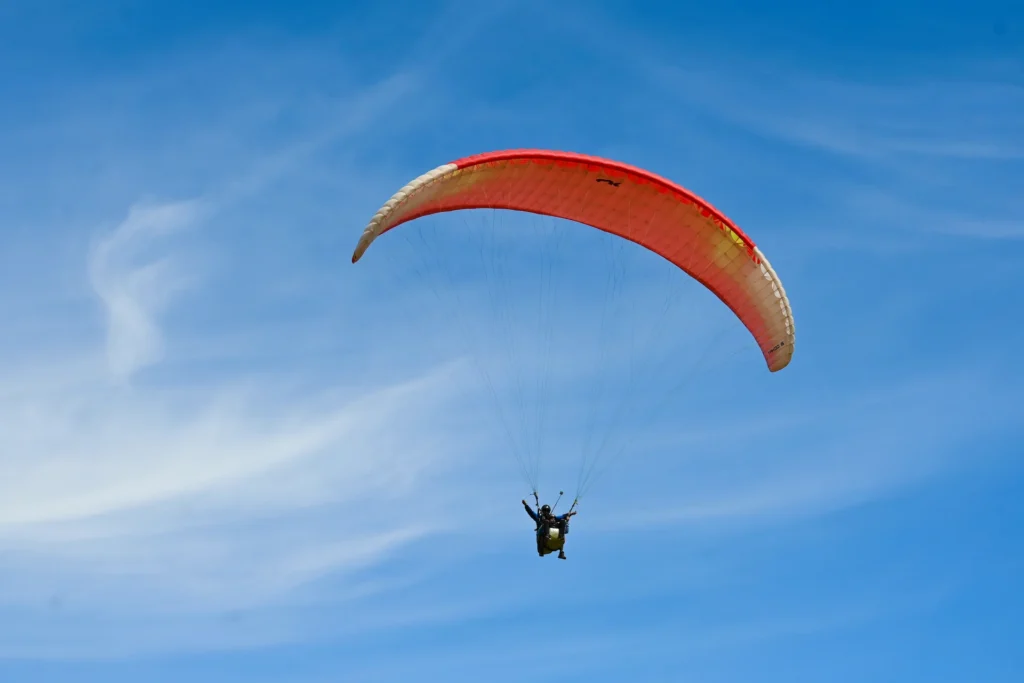
Cap Corse lends itself to every way of enjoying the sea and the hills. For thrill-seekers, paragliding lets you take in the same landscape in silence, while flyboarding turns the sea into a playground. For a gentler approach, a boat trip gives you the opposite view, from the sea towards the cliffs.