Rock climbing in Balagne
Discover the rock climbing activities available in the Balagne region!
Rock climbing in Balagne
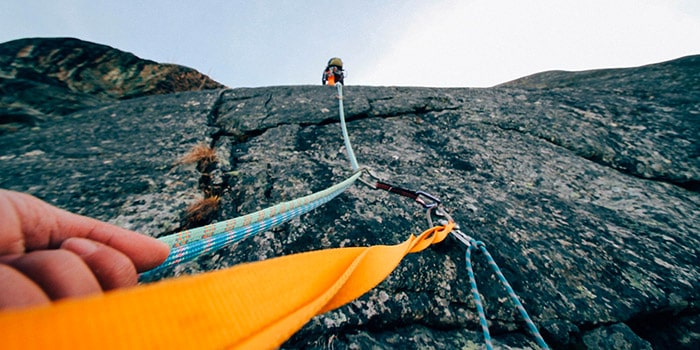
Half an hour’s drive from Calvi, Balagne shifts abruptly from the seaside to the high mountains. It is in this hinterland, at the foot of the Monte Cinto massif, Corsica’s highest peak at 2,706 metres, that most of the region’s rock climbing takes place. The contrast is striking: morning on a fine sandy beach, afternoon at the foot of a granite wall surrounded by centuries-old laricio pines.
Our selection of rock climbing activities for Balagne
Unfortunately no activities were found. Find more activities below!
Rock climbing
Other activities
The best nearby campsites in Balagne


Bonifatu and the Calvi hinterland
The Bonifatu forest, 3,000 hectares of pines and granite at the foot of Monte Cinto, forms the heart of the area. Crossed by the Figarella river and its natural pools, it serves as a starting point for several GR20 itineraries and concentrates a good part of the region's climbing sites. The granite here is of good quality, with compact slabs and clean cracks, a rock that is noticeably more adherent than the schist of Cap Corse.
A few landmarks to situate this area:
- The Bonifatu forest, the historic starting point towards the Monte Cinto massif.
- The hilltop village of Sant'Antonino, classified among the most beautiful villages in France, perched on a rocky spur overlooking the entire Balagne.
- Pigna, a village of craftsmen and musicians, nestled in the hills behind Île-Rousse.
- Corbara and Montemaggiore, two villages clinging to the foothills that dominate the coastal plain and the Gulf of Calvi.
An atmosphere between mountain and sea
What sets the Balagne apart is the immediate proximity between the climbing sites and the coastline: from certain high-altitude routes, the view simultaneously takes in the snow-capped peaks of the Cinto for part of the year and the blue of the Gulf of Calvi. This configuration makes it a particularly photogenic area, but it also means sometimes marked temperature differences between the valley floor, cool and shaded, and the exposed ridges in full sun.
The hilltop villages of the region, often themselves built on rocky spurs, bear witness to this ancient relationship between Balagne settlement and stone: the same materials and sometimes the same outcrops that are found today on the climbing sites were used to build these perched villages several centuries ago.
The Bonifatu forest is also home to discreet but present wildlife: mouflons on the steepest slopes, wild boars in the undergrowth, and mountain birdlife that benefits from the site's relative calm outside the busiest weekends. The Laricio pine, an endemic species of Corsica that can exceed 40 metres in height, shapes much of the forest landscape surrounding the climbing sites, offering welcome shade on the approach paths.
When to go to the Balagne
The climbing season generally runs from April to November, with peak visitor numbers in May-June and September-October, when temperatures remain pleasant without excessive heat. In the height of summer, the relative altitude of Bonifatu (the sites are often between 500 and 1000 metres) offers welcome coolness compared to the coast, but the hottest days are best avoided in the middle of the day. In winter, snow can cover the highest areas of the Monte Cinto massif, making some accesses impassable without suitable equipment.
Equipment and approach in the Bonifatu forest
The Bonifatu forest lends itself well to comfortable climbing: the car parks at the end of the road allow you to reach most sites with an approach walk of just a few dozen minutes, a real advantage compared to other massifs on the island where you sometimes have to walk an hour or more before putting your hands on the rock. The path runs alongside part of the Figarella river, shaded by laricio pines, which makes the approach pleasant even in the height of summer.
The compact granite of the area calls for sticky climbing shoes rather than classic hiking boots as soon as the slope steepens. A helmet is recommended on the most popular routes, where rockfall remains possible, as on most natural mountain crags. As everywhere in Corsica, water must be carried in sufficient quantity: although the Figarella allows you to cool off, its water is not necessarily drinkable without treatment. Finally, mountain weather can change quickly at the end of the day, especially in summer, when storms can form over the Cinto ridges within a few hours: checking the forecast before setting out remains a useful precaution.
A practice accessible to all
Balagne offers a tiered range that goes from family introduction to committed multi-pitch routes for experienced climbers. Local operators organise supervised outings on different sites suited to each person's level, which allows a mixed group, beginners and experienced climbers together, to share the same day on different routes. Technical equipment (harnesses, helmets, ropes) is generally provided for supervised outings, a real plus for a family discovering the sport without investing in a full kit.
For children, the relatively short approach from the Bonifatu forest car parks and the chance to cool off afterwards in the Figarella pools make it a complete outing, combining effort and relaxation by the water.
Other activities to combine
The massif that houses the Balagne climbing sites is also the playground for several other outdoor activities. The Balagne via ferrata offers a discovery of verticality with fixed equipment, while canyoning in the area makes use of the same mountain torrents in a watery descent. Balagne hikes offer many variations around Bonifatu and trails linking the hilltop villages to one another. For younger visitors or those seeking heights without climbing technique, the Balagne treetop adventure courses are a good alternative.
After the effort, head for the most beautiful beaches in the region for a refreshing swim, or a stroll through the narrow streets of one of the hilltop villages mentioned above.